
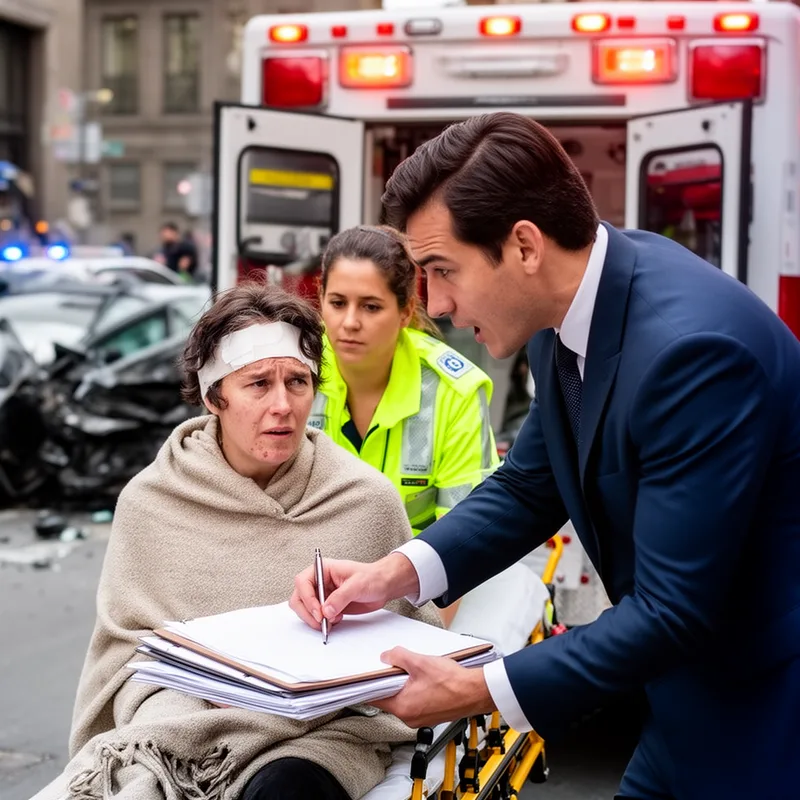
ambulance-chase law
- noun
- /ˈæmbjʊləns tʃeɪs lɔ/
- Slang
- She decided to avoid ambulance-chase law and built a reputation as an ethical attorney.
Examples
-
Working in ambulance-chase law made him uncomfortable due to its aggressive practices.
-
Many see ambulance-chase law as damaging to the profession's public image.
-
Many people criticize ambulance-chase law as unethical.
-
Is ambulance-chase law really a common practice?
-
Many people believe that ambulance-chase law undermines the integrity of the legal system.
-
She refused to engage in ambulance-chase law because she values her client's welfare above profit.
-
The rise of ambulance-chase law has sparked debates about ethics in the legal profession.
Synonyms

 1
9.3
1
9.3

Lawyers go to accident scenes to find clients, seen by many as wrong

A practice of rushing to contact people after accidents to get clients, often seen as unfair
How Aggressive
- Slang

- Formal
19
5.8
878
2.7
52
4.4
Surface Forms
Morphology
ambulance-chase + law
The parts 'ambulance' + 'chase' + 'law' literally suggest pursuing accident victims in the context of legal practice, so a learner who knows the words could plausibly infer it refers to lawyers seeking clients from accidents. However, the term is a metaphorical, pejorative idiom ('ambulance-chasing') with a culturally specific negative sense that is not fully predictable from the constituents, so full understanding usually requires prior exposure.
Etymology
Ambulance-chase law comes from the image of lawyers literally following an ambulance to chase accident victims into hospitals to offer legal help. That's why it means 'seeking clients after accidents' and is seen as an aggressive, unethical practice.