
alluvion
- noun
- /əˈluːviən/
- Specialized
- Heavy rains caused an alluvion that flooded the nearby fields.
Examples
-
The river's alluvion transformed the normally arid fields each spring.
-
After the alluvion, the banks were covered with nutrient-rich silt.
-
Certain legal disputes arose over land created by the gradual alluvion of the river.
-
The alluvion from the river changed the landscape dramatically.
-
The heavy rains caused an alluvion, which flooded the nearby fields and left behind fertile soil.
-
After the river overflowed its banks, the alluvion covered the previous dry land with rich sediment.
-
The alluvion from the flood deposited nutrients on the farmland, improving the soil for planting.
Synonyms

 286
1.0
286
1.0

A large amount of water that covers land that is usually dry
 40
2.1
40
2.1
Water that covers land after very heavy rain
 11
6.3
11
6.3
A very heavy rain that causes flooding
 1
7.7
1
7.7
Flooding of land when water covers areas that are normally dry
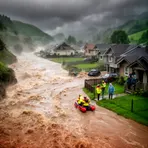
A sudden large flow of water that floods land
Surface Forms
Etymology
Alluvion comes from a Latin word that meant 'to wash toward', from the parts ad- 'to' and luere 'to wash'. A helpful image is water washing over the land, which is why alluvion can mean an overflow or flood.