

allomorphic
- adjective
- /ˌæl.əˈmɔr.fɪk/
- Specialized
- In chemistry, allomorphic characteristics can show how a compound may exist in different structural forms.
Examples
-
The term allomorphic variations in the study of linguistics illustrate how a single morpheme can have different forms.
-
Though clearly not as frequent as creo, leo, and veo, the form seo, being in allomorphic status with the very high frequency so, may have been included in the analogical chain shown above in (15), as depicted below in (16): PREFORMATTED TABLE
Academic text (2001) -
The researcher explained that the allomorphic nature of the data required a flexible approach to analysis.
Synonyms

 1
8.9
1
8.9

Having many different forms, like minerals or animals with different looks


 1
9.2
1
9.2
Having many different forms or shapes
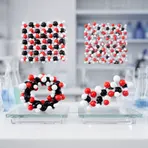
Being made of the same elements but forming different molecules
Surface Forms
Morphology
allomorphic = allomorph (semi-transparent) = allo + morph + allo + ic
Formed by regular suffixation from the technical noun 'allomorph', but both 'allo-' and 'morph' are specialized combining forms unfamiliar to average learners.
Etymology
Allomorphic comes from the Greek parts allo- ('other') and morph ('form' or 'shape'). So something described as allomorphic has 'other' forms — for example, a part of a word that changes shape in different words or a compound that appears in different forms.