
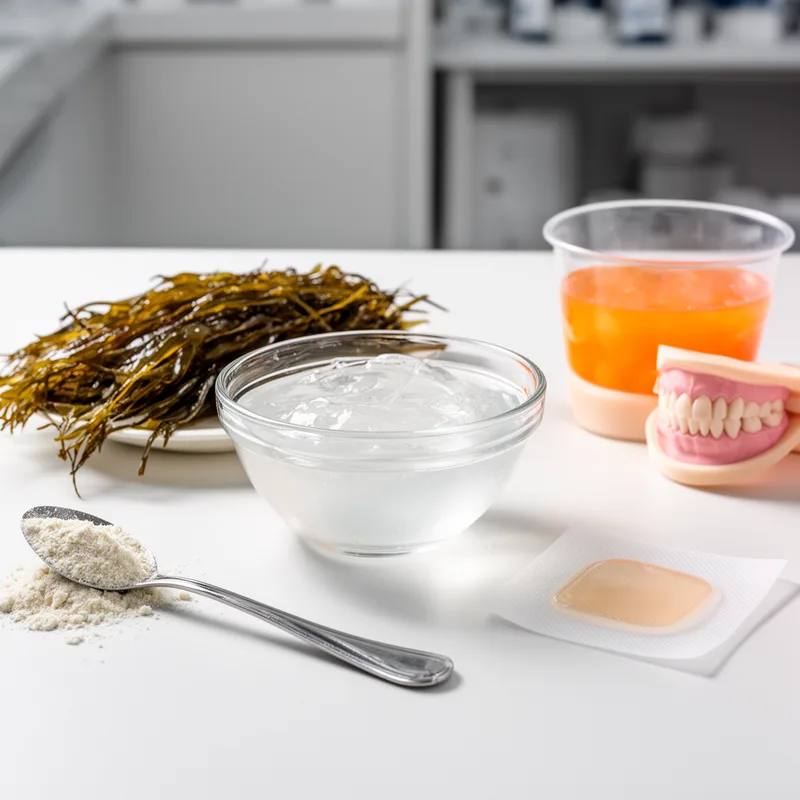
alginate
 2
6.8

- noun
- /ˈæl.dʒɪ.neɪt/
- Specialized
- In dental offices, alginate is often mixed with water to create molds of patients' teeth.
- sodium alginate
- calcium alginate
Loading YouTube…
Watch on YouTubeAnd then the this is alginate, which is a gel made from algae.
- And then the this is alginate, which is a gel made from algae.
Examples
-
The recipe calls for an alginate solution to prepare the dessert's unique texture.
-
The lemon pearls are made with alginate.
-
This is chromatic alginate that changes colour as it sets.
-
Yeager, now we're ready to apply the alginate.
-
Now sodium alginate dissolves in water.
-
Impressions of both arches were taken with an alginate (Densply) in a dental tray (Ash), which gave a negative replica of the teeth, which set in 45 seconds. Then a positive replica, a model was obtained with dental stone IV, which sets in 13 minutes.
Academic text (2007) -
Sodium alginate is commonly used in food products as a thickening agent.
Synonyms
 2
6.8
A jelly like substance from seaweed used to grow bacteria and thicken food

 1
7.2
A jelly made from seaweed that makes food firm and helps grow bacteria in labs
 1
7.2
A jelly made from seaweed that scientists use to form a gel to separate DNA or proteins
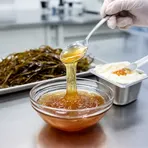 1
8.7
A thick, jelly-like substance from brown seaweed used to make food and other products thicker
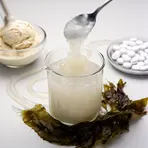 1
7.0
A thick, jelly-like substance made from brown seaweed used to thicken food and medicines
Surface Forms
Morphology
alginate = alginic (semi-transparent) = algin + ate
The form is clearly built from an algae-related stem plus the chemical suffix '-ate', but the technical meaning 'salt of alginic acid' and the specialized use of '-ate' are likely unfamiliar to average learners.
Etymology
Alginate comes from the root alga (the same root as algae) which means 'seaweed', plus the ending -ate that shows it is a 'salt' or compound. So alginate is literally a 'seaweed salt' — a substance from seaweed that forms gels or makes foods and dressings thicker.