
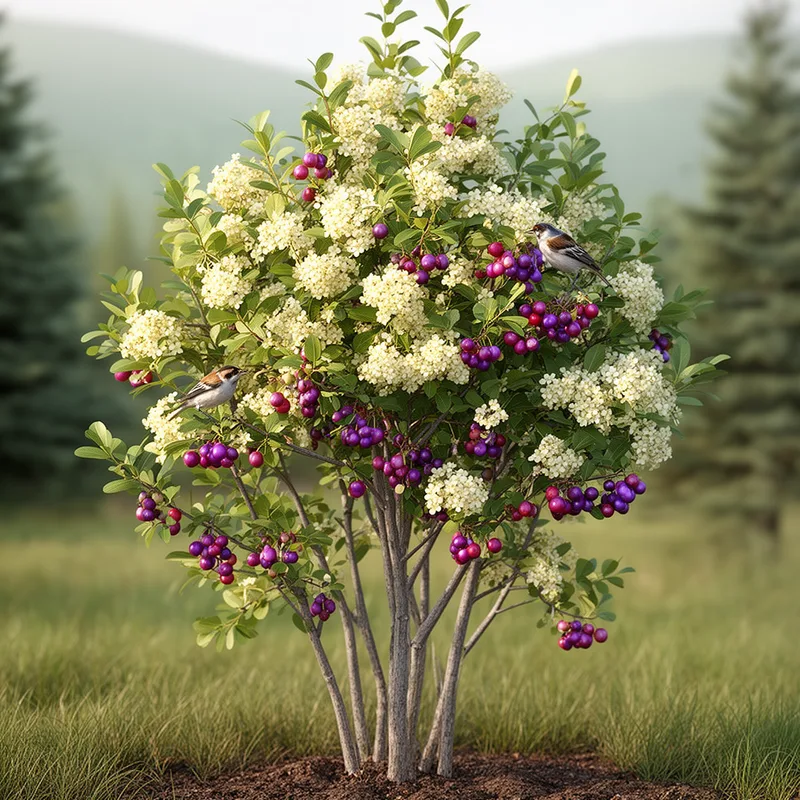
alder-leaved serviceberry
- noun
- US
- The alder-leaved serviceberry blooms in early spring with clusters of creamy white flowers.
Examples
-
Birds are attracted to the purple-red fruits of the alder-leaved serviceberry during the summer.
-
Gardeners value the alder-leaved serviceberry for its attractive foliage and ornamental berries.
-
The alder-leaved serviceberry blooms beautifully in spring.
-
I saw an alder-leaved serviceberry in my neighbor's garden.
-
Birds are attracted to the purple-red fruits of the alder-leaved serviceberry during the summer.
-
The alder-leaved serviceberry blooms in early spring with clusters of creamy white flowers.
-
Gardeners value the alder-leaved serviceberry for its attractive foliage and ornamental berries.
Synonyms
A bush or small tree with sweet-smelling white flowers and small purple-red berries

A small tree or shrub from northwestern North America with white flowers and purple-red berries you can eat
Surface Forms
Morphology
alder-leaved + serviceberry
The phrase is compositionally built: 'alder-leaved' means having leaves like an alder and 'serviceberry' names a shrub (Amelanchier), so the whole denotes a serviceberry with alder-like leaves. This adjective+noun botanical formation is regular and predictable, so a B1 learner who knows the constituent words can reasonably infer the meaning.
Etymology
Alder-leaved serviceberry is a name that describes the plant: alder points to leaves that look like an alder, and serviceberry is the common name for its small, sweet fruit. One popular story says people called it 'serviceberry' because it bloomed when spring church 'services' could happen again after winter, so the name helps you remember both the leaf shape and the berry.

