
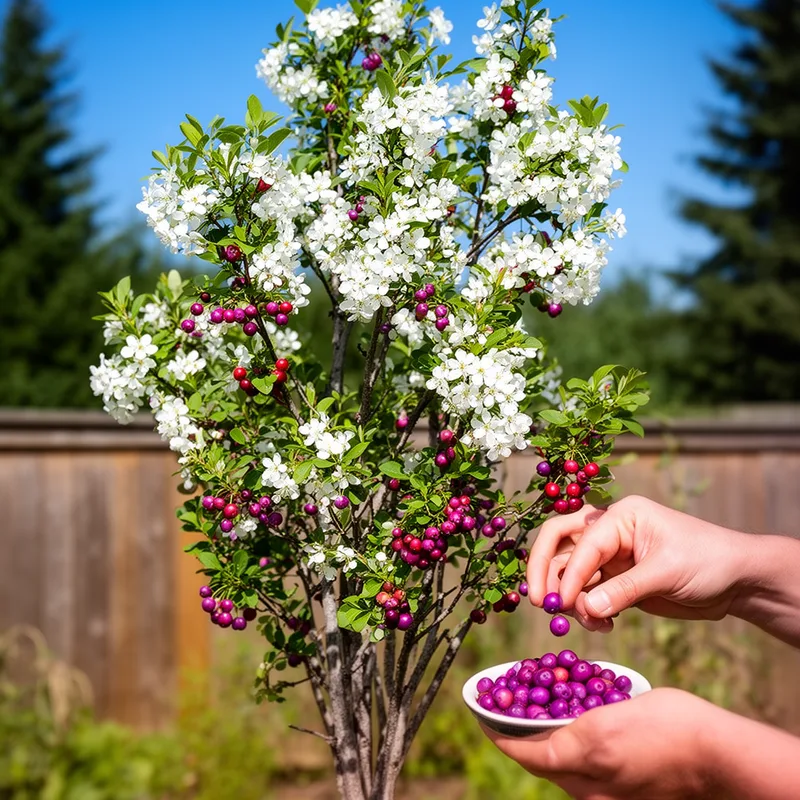
Amelanchier alnifolia
- noun
- Specialized
- The Amelanchier alnifolia produces sweet berries enjoyed by both wildlife and people.
Examples
-
Many gardeners in Canada plant Amelanchier alnifolia for its attractive flowers and edible fruit.
-
Researchers are studying the nutritional value of Amelanchier alnifolia berries.
-
The Amelanchier alnifolia produces delicious berries.
-
Have you ever tasted Amelanchier alnifolia fruits?
-
Many gardeners in Canada plant Amelanchier alnifolia for its attractive flowers and edible fruit.
-
Researchers are studying the nutritional value of Amelanchier alnifolia berries.
-
The Amelanchier alnifolia produces sweet berries enjoyed by both wildlife and people.
Synonyms
A bush or small tree with sweet-smelling white flowers and small purple-red berries
A small tree or bush from northwestern North America with creamy white flowers and small purple-red berries
Surface Forms
Morphology
Amelanchier + alnifolia
The form is a Latin binomial (genus + species), so a learner who knows 'Amelanchier' as a genus can infer this refers to a plant (shrub/tree), but the species epithet 'alnifolia' is a specialized Latin term (missing in the provided data) and does not transparently convey 'saskatoon berry' or edible fruits to a B1 learner. Therefore the name partly signals it is a plant but does not allow a learner to derive the specific common meaning without prior exposure or botanical knowledge.
Etymology
Amelanchier alnifolia comes from the Cree word for the small, sweet 'berry' that people gathered and ate, so settlers began calling the plant 'saskatoon'. That's why the name points to the plant's edible fruit today.

