
agricultural export
 1
3.2
1
3.2

- noun
- /ˌæɡrɪˈkʌltʃərəl ˈɛkspɔrt/
- Brazil's agricultural exports include coffee, soybeans, and sugar, making it a key player in global trade.
- nontraditional agricultural exports
- agricultural export production
- increase in agricultural exports
Examples
-
The dramatic rise in demand for American agricultural exports prompted a corresponding expansion in production.
Academic text (1995) -
The bulk-cargo facilities of the lower Mississippi handle more than 60 percent of U.S. agricultural exports from the Midwest.
Academic text (2005) -
Any increase in net agricultural exports from Eastern Europe would lead, in turn, to lower world prices.
Academic text (1991) -
American trade and tariff policies continued the promotion of the production of agricultural export crops that the American economy needed.
Academic text (1993) -
We're in the four best years for agricultural exports in our history, and we can't afford to stop now.
Blog text (5) -
The major cause of the panic was a sharp but temporary downturn in agricultural exports to Britain.
Academic text (2013) -
Globally, agricultural export restrictions by major exporters harm food security for many other countries.
Blog text (19) -
Many people are trying to figure out how to increase our agricultural exports, and we routinely suffer farm crises when our export markets collapse.
Academic text (2001) -
As with Europe unable to grow crops, the demand for American agricultural exports exploded, leading to rising crop prices and rising incomes.
-
For example, he believes that unless developed countries are willing to open their markets to agricultural exports from developing countries and eliminate tariffs, developing countries and the poor people who live in them will derive limited benefits from globalization.
Academic text (2005)
Synonyms
 314
2.7
314
2.7
A product or service sold to another country
How Marketable

Surface Forms
Morphology
The meaning is directly compositional: 'agricultural' (relating to farming) modifies 'export' (goods sold abroad), so a B1 learner who knows both constituents can infer 'goods produced by farming and sold to other countries.' This noun–noun compound follows a common, cross-linguistic pattern and contains no idiomatic shift, making it immediately transparent to learners.
Etymology
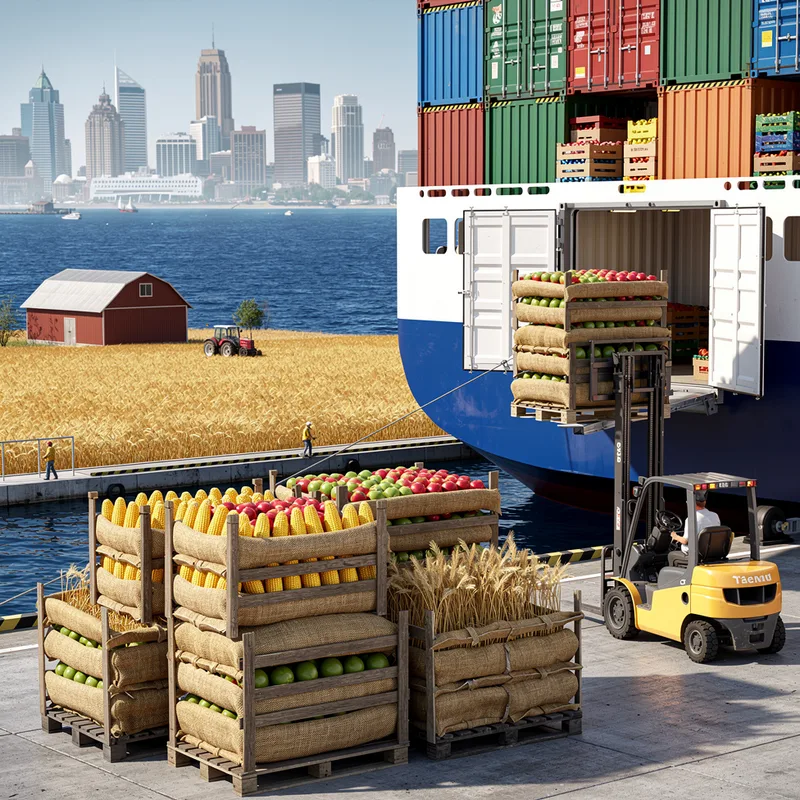
Agricultural export comes from the plain idea of farm goods being sent out of a country: agricultural means from farms and export means to send and sell abroad. Imagine farmers loading wheat or corn onto ships to sell in other lands — that picture explains why it means 'goods produced by farming and sold to other countries'.