
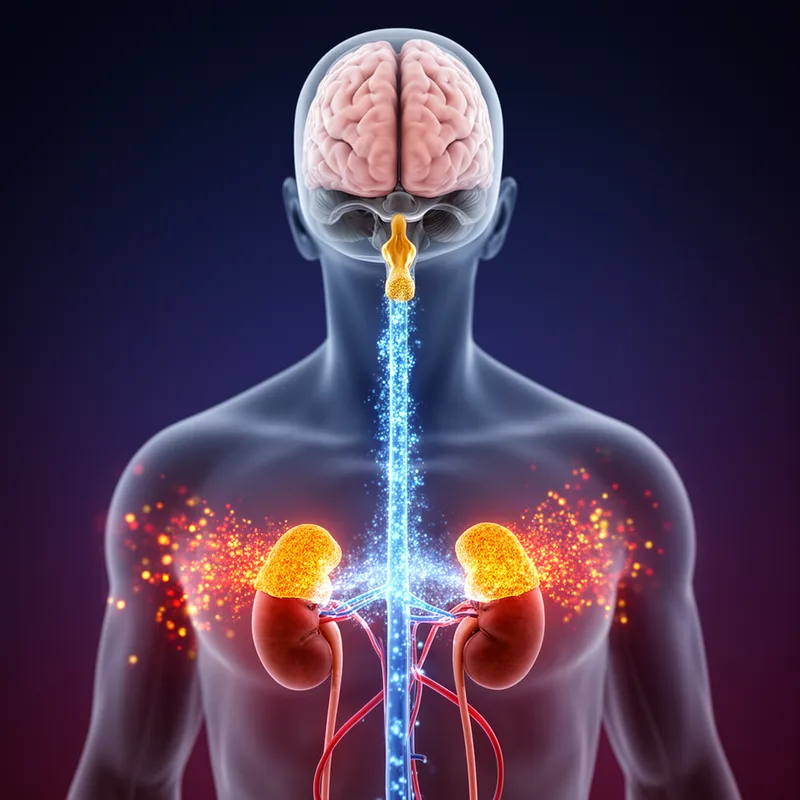
adrenocorticotrophin
- noun
- /əˌdrɛnəˌkɔrtɪkoʊˈtroʊfɪn/
- Specialized
 :
adrenocorticotrofina
:
adrenocorticotrofina
- The doctor explained that adrenocorticotrophin regulates the release of hormones from the adrenal glands.
Examples
-
Researchers studied how adrenocorticotrophin levels change in patients with pituitary disorders.
-
A deficiency of adrenocorticotrophin can result in reduced adrenal cortex function.
-
The doctor explained that adrenocorticotrophin helps control how the body responds to stress.
-
The adrenocorticotrophin level in the blood can indicate stress.
-
Doctors measure adrenocorticotrophins to assess adrenal function.
-
A deficiency of adrenocorticotrophin can result in reduced adrenal cortex function.
-
Researchers studied how adrenocorticotrophin levels change in patients with pituitary disorders.
Synonyms

 2
7.2
2
7.2

A hormone made by the front of the pituitary gland that tells the adrenal glands to make stress hormones


 1
9.4
1
9.4
A hormone from a small gland at the brain base that tells adrenal glands to make stress hormones

A hormone from the front part of the pituitary gland that tells the adrenal gland to make stress hormones

A hormone made by a gland in the brain that tells the glands above the kidneys to release stress hormones

A hormone made by a gland in the brain that tells the adrenal glands to make stress hormones
Surface Forms
Morphology
adrenocorticotrophin = corticotrophin (opaque) = adreno + cortico + trophin
The prefix 'adreno-' transparently signals relation to the adrenal gland, but the base 'corticotrophin' and its combining elements are technical and unfamiliar to average learners.
Etymology
The word adrenocorticotrophin is made of three parts: adreno- like adrenal and adrenaline meaning 'near the kidney', cortico- from cortex meaning 'outer layer', and -trophin meaning 'to feed' or 'help grow'. So, the name means a substance that 'feeds' or tells the adrenal cortex to make hormones, which is exactly what this hormone does.