
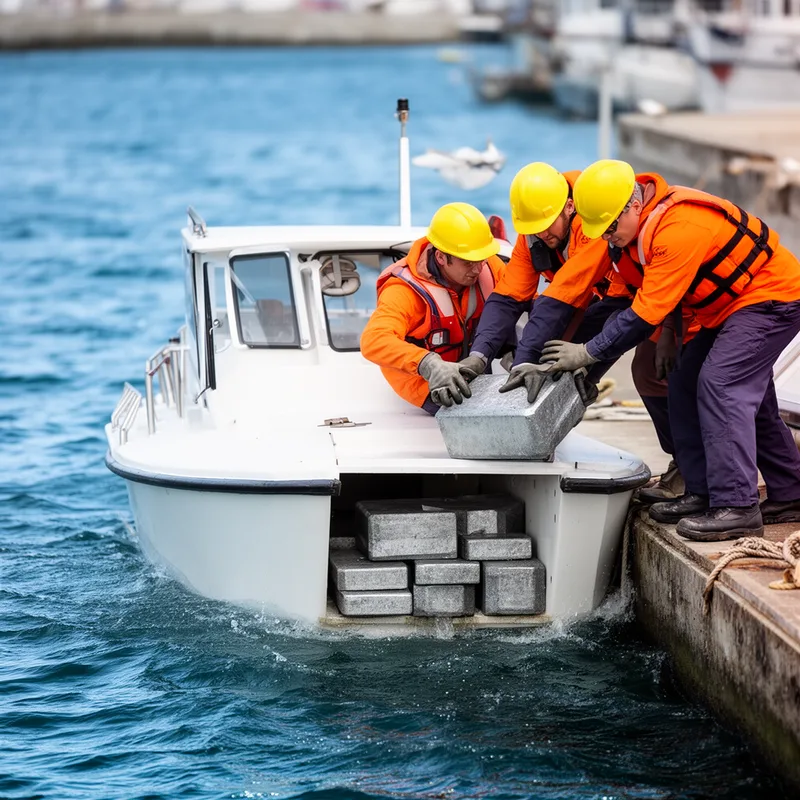
to add ballast
- phrasal verb
- Specialized
- They need to add ballast to the ship.
Examples
-
The crew added ballast before setting sail.
-
The crew decided to add ballast to the ship to ensure it would not tip over in rough waters.
-
Engineers had to add ballast to the rail tracks for added support.
-
The airship's crew needed to add ballast to maintain the desired altitude.
-
To prevent the vessel from capsizing, they decided to add ballast before departure.
-
In order to improve stability during the flight, the pilots chose to add ballast to the aircraft.
-
They had to add ballast to the base of the structure to prevent it from swaying in strong winds.
Synonyms

 4
4.8
4
4.8

To add padding to something to make it more comfortable
 1
7.8
1
7.8
To make a ship or track steady by adding heavy stones and gravel
Antonyms


How Stable

Surface Forms
Morphology
The meaning is directly derivable from 'add' (to put in) plus 'ballast' (weight used for stability); together they transparently denote putting weight into a vessel or structure to improve balance. This verb + object composition follows common English and cross‑linguistic patterns, so a B1 learner who knows both constituents will understand the MWE.
Etymology
Add ballast comes from old ships, where crews put heavy stones or sand called ballast in the bottom of the ship to make it steady. So today it means 'to put weight into something to make it more stable'.