
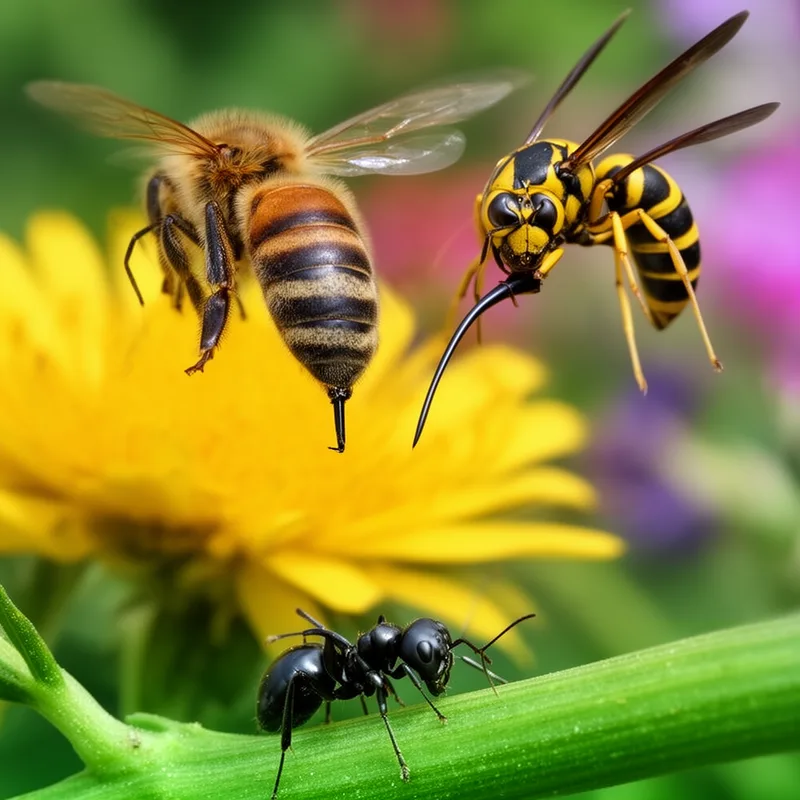
aculeate
- adjective
- /əˈkjuːliˌeɪt/
- Specialized
- Many aculeate insects use their stingers for defense against predators.
Examples
-
Bees, ants, and wasps are among the most common aculeate insects found in gardens.
-
The biologist compared the stinging mechanisms of several aculeate species.
-
The aculeate wasp is known for its painful sting.
-
Are all aculeate insects dangerous?
-
Bees, ants, and wasps are among the most common aculeate insects found in gardens.
-
Many aculeate insects use their stingers to defend themselves from threats.
-
The researcher noted that several aculeate species possess specialized stingers for protection.
Synonyms
Antonyms


How Pointed

Surface Forms
Morphology
aculeate = acule + ate
Formed from the non-productive combining form 'acule-' (meaning 'sting') plus the suffix '-ate'; the root is not a recognizable standalone English word, so learners cannot transparently derive the meaning from common English bases.
Etymology
Aculeate comes from the Latin aculeus 'prickle' and acus 'needle', and it is related to the English word acupuncture, which uses needles. So an aculeate insect has a sharp point or stinger like a little needle for defense.