
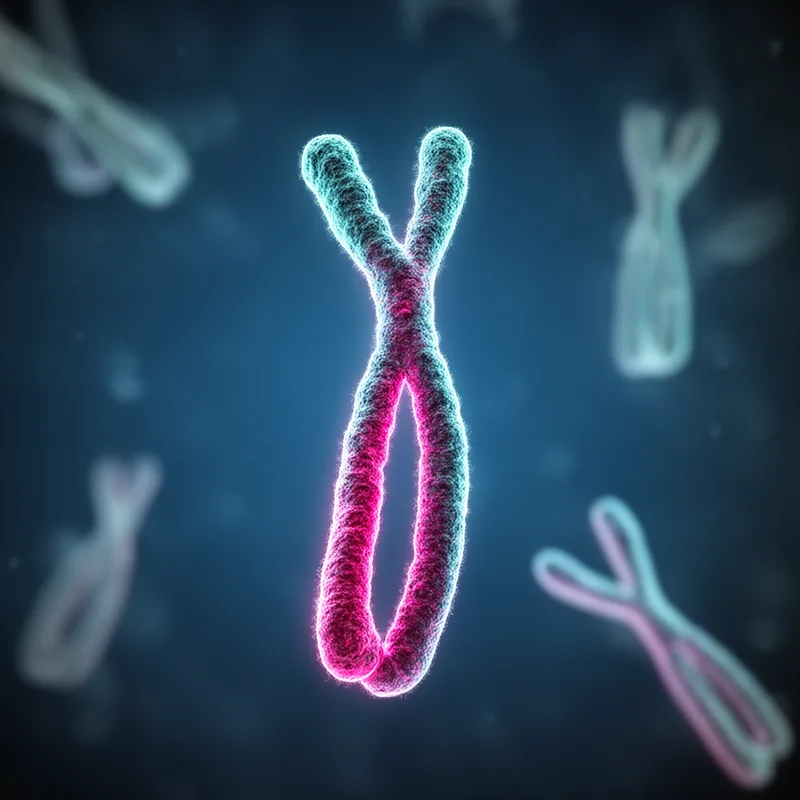
acrocentric chromosome
- noun
- /ˌækrəˈsɛntrɪk ˈkɹoʊməsom/
- Specialized
- Researchers observed that the acrocentric chromosome had a short p arm and a much longer q arm under the microscope.
Examples
-
Down syndrome is associated with a trisomy of an acrocentric chromosome, specifically chromosome 21.
-
In humans, the acrocentric chromosomes include chromosomes 13, 14, 15, 21, and 22.
-
In humans, several chromosomes are classified as acrocentric chromosomes because of the position of their centromeres.
-
The acrocentric chromosome has a unique structure.
-
In humans, several chromosomes are classified as acrocentric chromosomes because of the position of their centromeres.
-
Researchers observed that the acrocentric chromosome had a short p arm and a much longer q arm under the microscope.
-
In humans, the acrocentric chromosomes include chromosomes 13, 14, 15, 21, and 22.
How Off-center
- Specialized

- Specialized
- Specialized
Surface Forms
Morphology
The adjective 'acrocentric' explicitly describes a chromosome with the centromere near one end (short p arm, long q arm), so combining it with 'chromosome' yields a directly compositional meaning. This is a regular adjective+noun modification that a learner who knows both constituent definitions can readily understand.
Etymology
Acrocentric chromosome describes a chromosome whose centromere sits very near one end, so it has a very small short arm on one side and a much longer long arm on the other. That's why the name refers to a chromosome with this uneven shape.

