
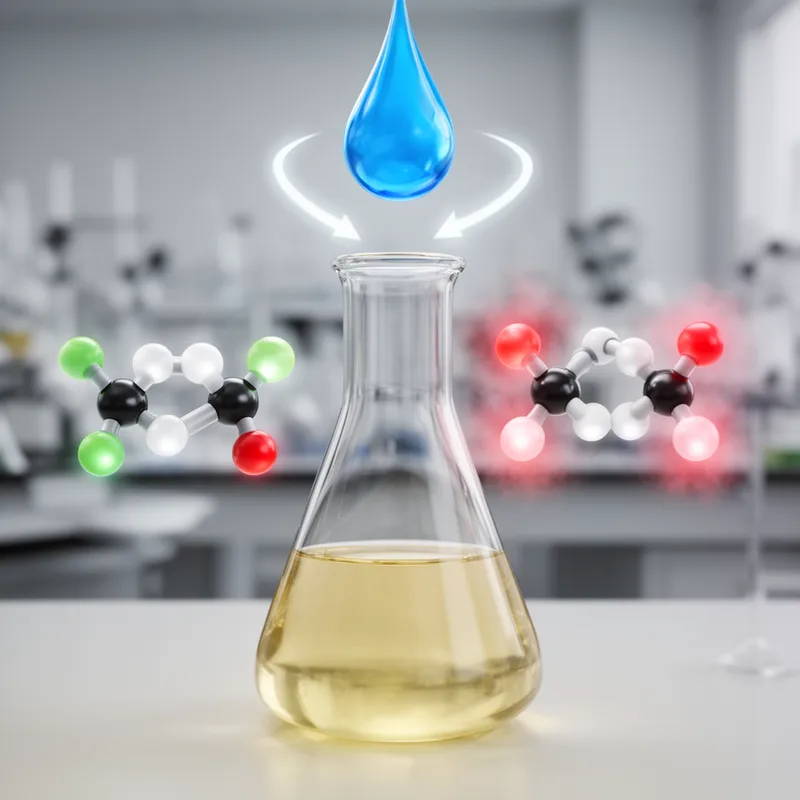
acid anhydride
- noun
- /ˈæsɪd ænˈhaɪdraɪd/
- Specialized
- When sulfur trioxide is reacted with water, it forms sulfuric acid, making it an acid anhydride.
Examples
-
So that, you see, is the acid anhydride of phosphoric acid what we're producing here?
-
The chemist explained how the acid anhydride could be used to create various acid compounds.
-
They studied the characteristics of an acid anhydride in their organic chemistry class.
Synonyms



 1
9.9
1
9.9
A compound made when water is removed from an acid

A type of organic chemical that reacts with water to make acids
Surface Forms
Morphology
The compound is compositionally transparent: 'acid anhydride' denotes an anhydride that is related to or derived from an acid, which directly follows from the meanings of 'acid' and 'anhydride'. This noun–noun formation and the technical sense of 'anhydride' (formed by dehydration) make the overall meaning inferable to a learner who already knows both constituents.
Etymology
Acid anhydride comes from the parts acid and anhydride, where anhydride means 'without water'. Imagine an 'acid missing water' that becomes an acid again when it meets water, so the name explains why these chemicals 'form acids' with water.