

achromic
- adjective
- /eɪˈkroʊmɪk/
- Specialized
- Some forms of albinism leave the skin almost completely achromic.
Examples
-
The achromic paint was perfect for the minimalist design.
-
Her dress was an achromic shade that matched everything.
-
The achromic tissues did not absorb the dye during the test.
-
The scientist examined an achromic solution under the microscope.
-
Some forms of albinism leave the skin almost completely achromic.
-
The achromic tissues did not absorb the dye during the test.
-
The scientist examined an achromic solution under the microscope.
Synonyms



 1
8.1
1
8.1
Colors that do not have any hue, like black, white, and gray

Having no color and looking clear or white

Something that has no color and looks grey or pale
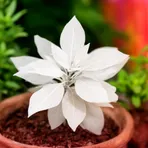
Having no color or pigment
Antonyms
How Colorless

Surface Forms
Morphology
achromic = chromic (transparent) = a + chrom + ic
If a learner knows 'chromic', adding the negative prefix 'a-' gives the straightforward meaning 'without color' or 'not chromic'.
Etymology
The word achromic comes from Greek parts a- meaning 'without' and chroma meaning 'color', as you can see in monochrome and chrome. So, achromic describes something that is 'without color' or colorless.