
acetylcholinesterase


 1
9.3
- noun
- /ˌæsɪˌtɪlˈkoʊlɪnˌɛstəreɪs/
- Specialized
- Medication has a place; acetylcholinesterase inhibitors (e.g., donepezil) are used in moderate disease, and these may produce marked temporary benefits in some sufferers.
Examples
-
A deficiency in acetylcholinesterase can cause excessive levels of acetylcholine, leading to muscle spasms.
-
Initially, it had been related to the inhibitory effect of acetylcholinesterase enzyme 14.
Academic text (2007) -
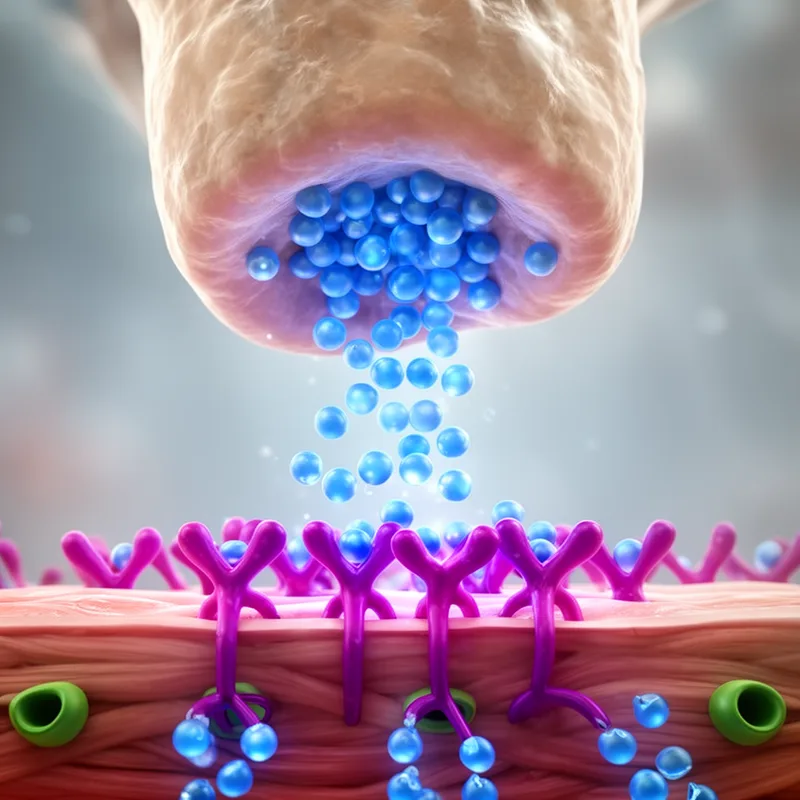
ACHE acetylcholinesterase in the synaptic cleft.
-
This represents a significant accomplishment," says George. "In the resistant tick, we suspect that the gene coding for acetylcholinesterase may have become altered to block the action of coumaphos."
Academic text (1994) -
In addition, the response to stimulation of the vestibular nerve is enhanced by inhibition of acetylcholinesterase and blocked by the antimuscarinic drug scopolamine.
Academic text (2005) -
The enzyme acetylcholinesterase breaks down acetylcholine, regulating neurotransmission in the nervous system.
-
Certain medications inhibit acetylcholinesterase to improve communication between nerve cells.
Synonyms
 1
9.1
A body enzyme that breaks down acetylcholine in nerves
Surface Forms
Morphology
acetylcholinesterase = acetylcholine (transparent) = acetylcholine + ase
Meaning is predictable as an enzyme acting on acetylcholine via the common enzyme-forming suffix '-ase'.
Etymology
Acetylcholinesterase comes from three parts: acetyl ('vinegar' or 'acid'), choline (a body chemical), and -esterase (an enzyme that 'breaks' a certain chemical link). So, acetylcholinesterase is literally the enzyme that 'breaks down' the chemical acetylcholine in the nerves, which explains its role in controlling nerve signals.