
acetylcholine
 4
7.2
4
7.2

- noun
- /ˌæsɪˈtɪlˌkoʊlin/
- Specialized
- When you focus, you release brain chemicals like the neurotransmitter acetylcholine that enable plasticity and vivify memory.
- acetylcholine-induced
- nicotinic acetylcholine
- response to acetylcholine
Loading YouTube…
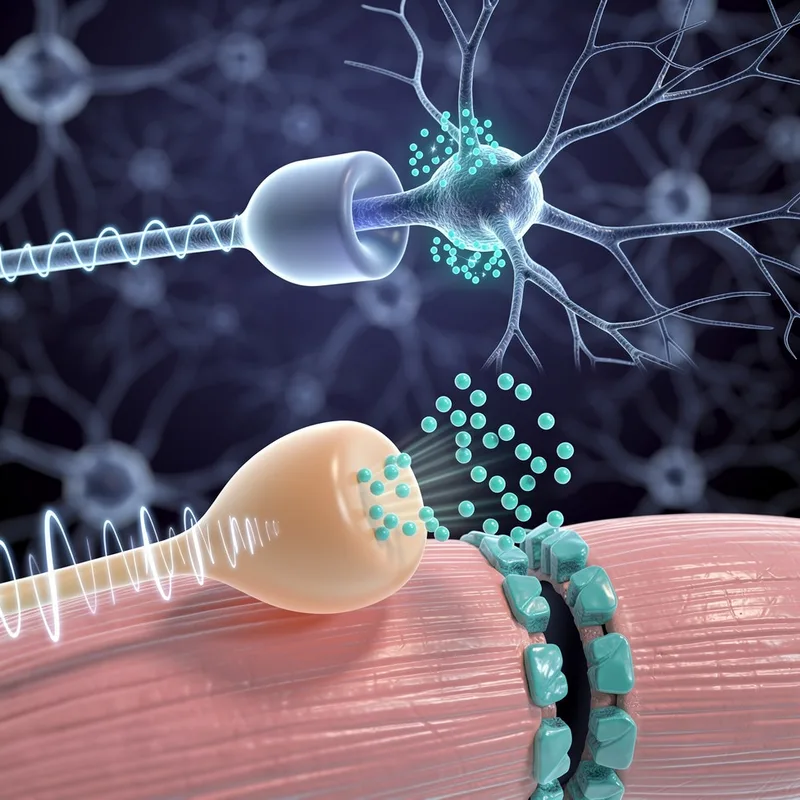
Watch on YouTubeBotulism toxin causes an inhibition of the release of acetylcholine, as diagrammed here.
- Botulism toxin causes an inhibition of the release of acetylcholine, as diagrammed here.
- Nicotine binds to so-called nicotinic acetylcholine receptors.
- I mean, impulses are always regulated by by Gabin, by glutamate and acetylcholine is one of them.
- Not surprisingly then drugs that increase cholinergic or acetylcholine transmission will increase focus and cognition.
- And that when it is triggered on can stimulate another chemical called acetylcholine in the brain, which is a neurotransmitter.
Examples
-
In lab rats, a surge in acetylcholine leads to memory improvements a month later.
-
Botulism toxin causes an inhibition of the release of acetylcholine, as diagrammed here.
-
However, we observed little dose response to acetylcholine in either group.
Academic text (1992) -
Selective impairment to acetylcholine suggests that, at a molecular level, the defect is limited to a specific pathway.
Academic text (1992) -
Endothelium-dependent vasodilation in response to acetylcholine is impaired in the coronary microvasculature of hypercholesterolaemic subjects.
Academic text (1992) -
Botulinum toxin blocks the release of acetylcholine from nerve endings and can selectively and reversibly induce muscle weakness and help reduce spasticity.
Academic text (2015) -
For our muscles to spring into action, they must be stimulated by acetylcholine released from a nerve ending.
-
The drug helps boost levels of a chemical messenger in the brain called acetylcholine, which aids in memory.
Synonyms
 9
5.5
9
5.5
A chemical that carries signals between nerve cells
 1
7.9
1
7.9
A chemical messenger that carries signals between nerve cells
Surface Forms
Morphology
Etymology
Acetylcholine comes from two parts: acetyl, from a word for 'vinegar' (like 'acetic' acid), and choline, from a Greek word for 'bile' and the same root in cholesterol. So, acetylcholine is the chemical made from those parts that carries messages between nerves and helps muscles move.