

acaudate
- adjective
- /ˌeɪˈkɔːdeɪt/
- Specialized
- Some species of frogs are acaudate as adults, having lost their tails during development.
Examples
-
The tadpole transitions from having a long tail to becoming an acaudate adult frog.
-
In the fossil record, several acaudate mammals have been identified by their skeletal structure.
-
The acaudate frog is fascinating.
-
Did you see the acaudate fish?
-
Some species of frogs are acaudate as adults, having lost their tails during development.
-
In the fossil record, several acaudate mammals have been identified by their skeletal structure.
-
The tadpole transitions from having a long tail to becoming an acaudate adult frog.
Synonyms

 1
3.9
1
3.9

An animal or object without a tail

Not having a tail or tail-like part

An animal, often a frog, that has no tail
Antonyms
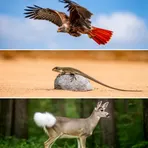
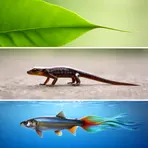
How Tailed

Surface Forms
Morphology
acaudate = caudate (semi-transparent) = a + caud + ate
If a learner knows the technical adjective 'caudate', the meaning 'not caudate' is fairly recoverable, but the privative prefix 'a-' is not highly familiar outside scientific vocabulary.
Etymology
Acaudate is made of the prefix a- meaning 'without' and the root caud- meaning 'tail'. So an acaudate animal is one 'without a tail', which is why the word is used to describe animals that lack a tail or tail-like part.