
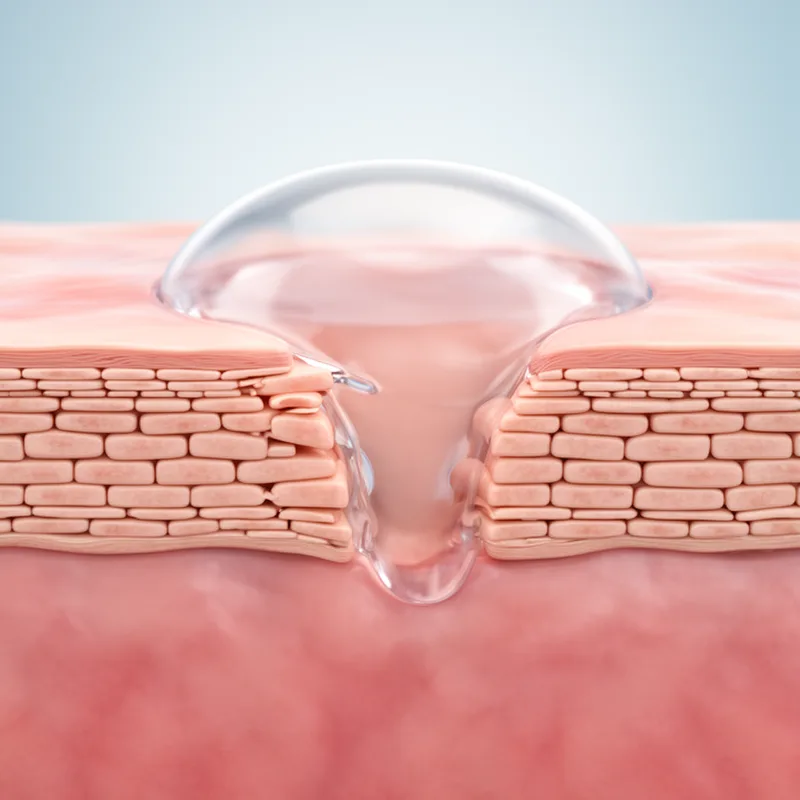
acantholysis
- noun
- /ˌækənˈθɑːləsɪs/
- Specialized
- The binding of autoantibodies results in acantholysis, the loss of cell-cell adhesion.
Examples
-
In pemphigus, acantholysis is a key feature that leads to painful blisters on the skin.
-
The subsequent acantholysis first leads to the formation of clefts, and then to predominantly suprabasal blisters.
Academic text (2007) -
Aacantholysis occurs when autoimmune diseases cause the skin cells to lose their cohesion.
-
Dermatologists often observe acantholysis in patients with severe forms of skin disorders.
Synonyms


 1
9.9
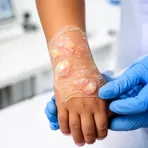
A condition in which the outer layer of the skin becomes loose and forms blisters
Antonyms

Surface Forms
Morphology
acantholysis = acanth + lysis
Both elements are specialized Greek combining forms (acanth- 'spine/thorn' and -lysis 'breaking') that are unfamiliar to average learners, so the meaning cannot be reliably inferred from common English vocabulary.
Etymology
Acantholysis comes from Greek parts: acanth- meaning 'thorn' or 'spine' and -lysis meaning 'breaking apart'. Think of skin cells losing their little 'spines' and falling apart, so acantholysis means the breaking of the links between skin cells that can cause blisters.