
ablactation
- noun
- /ˌeɪblækˈteɪʃən/
- Specialized
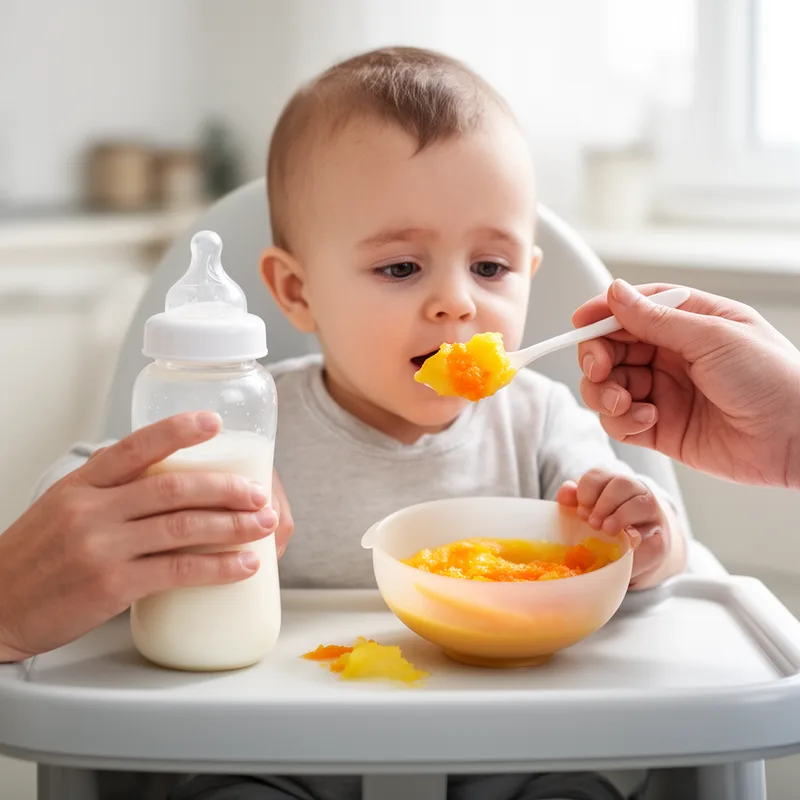
- Gradually introducing solid foods to an infant is a crucial part of ablactation.
Examples
-
The process of ablactation can begin around six months of age.
-
Veterinarians monitor the ablactation process in young animals to ensure healthy growth.
-
Ablactation is an important milestone in a baby's development and should be approached gradually.
-
The practice of ablactation varies widely between cultures and families.
-
Many parents find ablactation to be a challenging phase.
-
Parents often seek advice on the best methods for ablactation during the first year.
-
Successful ablactation helps ensure that the baby receives proper nutrition as it grows.
Synonyms

 2
3.7
2
3.7

Gradually giving a baby other food instead of mother's milk
Antonyms


How Weaned
- Specialized
 24
1.8
24
1.8
Surface Forms
Morphology
ablactation = lactation (transparent) = ab + lact + ation
Formed by the prefix 'ab-' (away) + 'lactation' so the meaning 'away from lactation' (weaning/cessation) is directly recoverable from the base.
Etymology
Ablactation comes from Latin parts ab- 'away from' and lact- 'milk', and it shares lact- with words like lactation and lactose. So, ablactation literally means moving 'away from milk', which is why it describes the gradual process of giving a baby other food instead of the mother's milk.