

Zanzibar copal
- noun
- Specialized
- The finest varnishes were often made using Zanzibar copal as a key ingredient.
Examples
-
Collectors prize carvings made from Zanzibar copal for their translucent amber appearance.
-
The artist used Zanzibar copal for her varnish.
-
Exports of Zanzibar copal played a significant role in the island's economy in the nineteenth century.
-
Many craftsmen prefer Zanzibar copal for its quality.
-
Artisans often choose to work with Zanzibar copal due to its beautiful clarity and durable finish in their varnishes.
-
The unique properties of Zanzibar copal make it highly sought after for creating high-quality lacquers.
-
Many historical furniture restorers rely on Zanzibar copal for its effectiveness in producing a glossy protective coat.
Synonyms

A natural sticky resin from tropical trees used to make varnish

A hard tree resin with a strong smell used to make varnish and polish wood
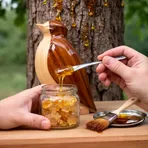
A sticky natural substance from the courbaril tree used to make varnish and glue

A hard resin from the Congo region used to make varnish and jewelry

A hard, yellow or red resin from trees used to make varnish for wood
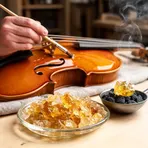
A brittle scented resin used to make varnish and incense
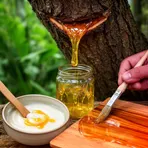
A sticky natural substance from South American trees used in ointments and varnishes
Surface Forms
Morphology
The phrase is a straightforward composition: 'copal' is a resin and 'Zanzibar' names its geographic source, so the meaning 'copal from Zanzibar' is directly derivable from the constituents. Place-name + substance constructions are cross-linguistically common, so a B1 learner who knows both words would understand the MWE's meaning.
Etymology
Zanzibar copal comes from the island Zanzibar and the word copal, which names a hard, yellow tree 'resin' that looks a little like amber. Traders collected sticky drops from local trees that dried into clear yellow lumps used to make 'varnish' and carvings, so the name came to mean the hard 'resin' from Zanzibar.

