
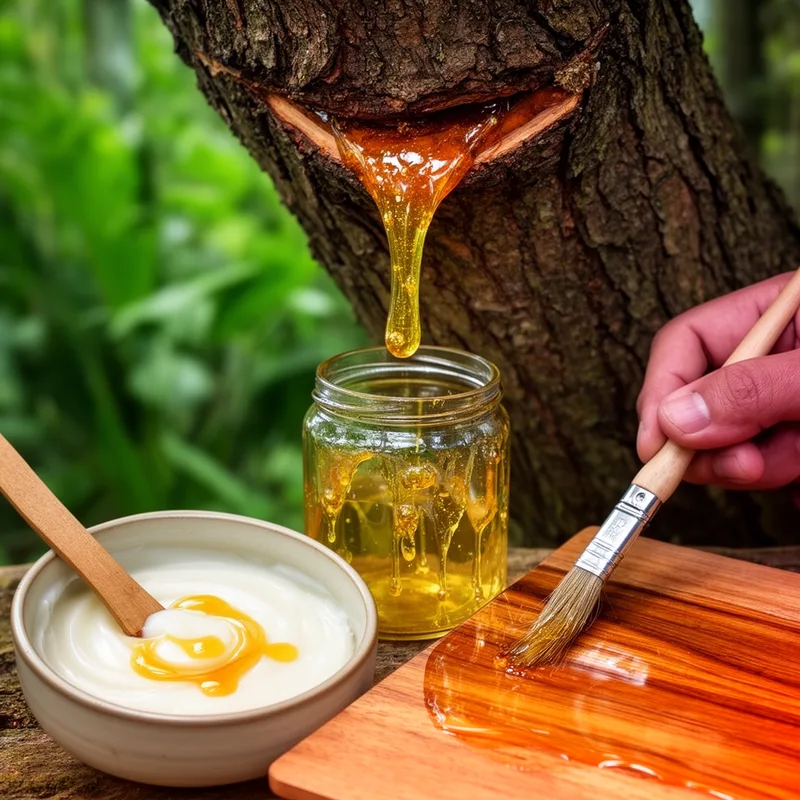
copaiba
- noun
- /koʊˈpeɪbə/
- Specialized
- The artist used copaiba in her varnish.
Examples
-
The craftsman applied a layer of copaiba to seal the wood.
-
The traditional healer used copaiba resin in his ointment to soothe skin irritations.
-
Herbalists sometimes use copaiba in topical ointments to treat skin irritations.
-
The copaiba resin is harvested from South American trees.
-
Copaiba is known for its healing properties.
-
Hygiene Soap promises to control body odor and kill bacteria with copaiba balsam, another natural disinfectant.
-
Artisans prefer using copaiba in their varnishes for its high-quality finish and durability.
Synonyms

A thick fragrant sap from Copaifera trees used in varnishes, perfumes, and ointments
A thick sticky oil from the Copaifera tree used in ointments and varnishes
Compounds
- Specialized
A thick fragrant sap from Copaifera trees used in varnishes, perfumes, and ointments
Surface Forms
Etymology
Copaiba came into English from Portuguese copaíba, a name taken from a native Amazon language for the 'tree' and the sticky 'resin' it gives. So today copaiba means the oily resin taken from South American trees and used in varnishes, ointments, and medicine.

