
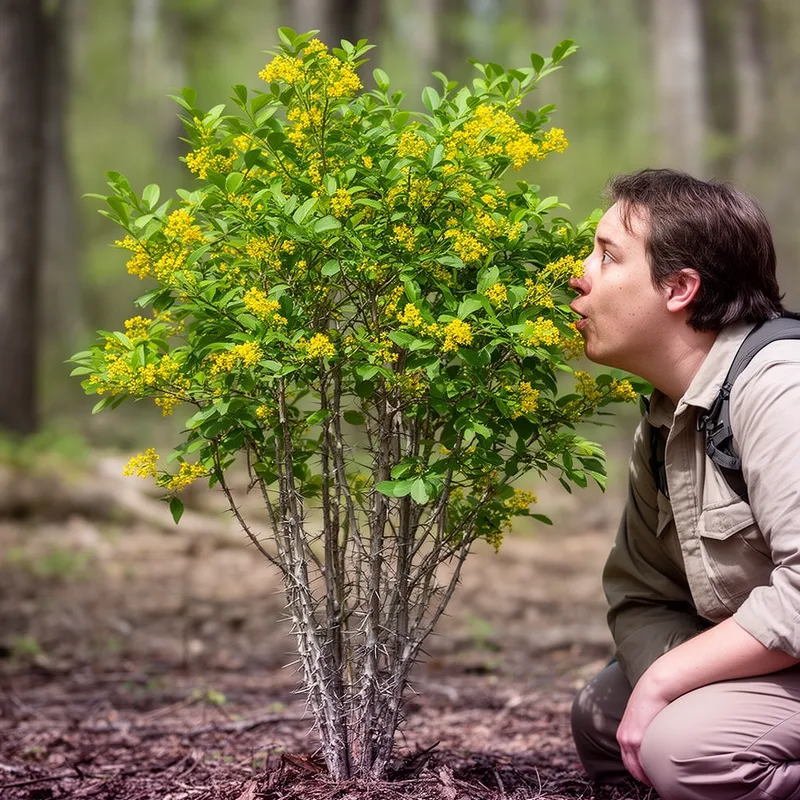
Zanthoxylum americanum
- noun
- /zænˈθɒksɪləm əˈmɛrɪkən/
- The spiny branches of Zanthoxylum americanum make it a distinctive feature in woodland areas.
Examples
-
The bark of Zanthoxylum americanum has been traditionally used for medicinal purposes by indigenous peoples.
-
Gardeners in cold climates appreciate Zanthoxylum americanum for its hardiness and attractive foliage.
-
The Zanthoxylum americanum is often found in wetland areas.
-
Many gardeners appreciate the Zanthoxylum americanum for its unique aroma.
-
Many gardeners appreciate the Zanthoxylum americanum for its unique aroma, especially during the blooming season.
-
The bark of Zanthoxylum americanum has been traditionally used for medicinal purposes by indigenous peoples in North America.
-
The spiny branches of Zanthoxylum americanum make it a distinctive feature in woodland areas, often deterring large herbivores.
Synonyms

A small bush or tree with sharp branches and yellow flowers with a pleasant smell in eastern North America

A small North American tree whose bark people chew to ease tooth pain
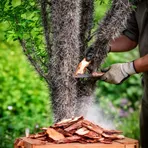
A tree or shrub with spiny branches often used for its strong-smelling bark
Surface Forms
Morphology
Zanthoxylum + americanum
This is a standard Linnaean binomial composed of a genus name and a species epithet; if a learner knows 'Zanthoxylum' as a genus of trees and understands 'americanum' as ‘of America’ (a Latinized adjective), they can infer it refers to the American species of that genus. Binomial taxonomic naming is a compositional, cross-linguistically regular pattern, so the overall meaning is derivable from the parts.
Etymology
Zanthoxylum americanum comes from Greek parts zantho meaning 'yellow' and xylon meaning 'wood', and the Latin americanum means 'from America'. So the name creates a picture of a yellowish woody plant that grows in North America, which matches the shrub's look and where it lives.

