

Ypres


 1
9.9
1
9.9
- proper noun
- /ˈiːprə/
- NSFW
- Battle of Ypres
Examples
-
The conflict over history centered around Edmonds's 1924 draft chapters of the Battle of Second Ypres.
Academic text (2005) -
After the first German gas attack at Ypres, the British War Office, by Lord Kitchener's direct command, dispatched Haldane's father, the eminent respiratory physiologist John Scott Haldane, to France in a desperate effort to overcome this new danger.
Academic text (1998) -
The Germans launched the first major poison gas attack near Ypres on April 22.
-
His division would go on to lose 50 percent of its strength a month later at the Second Battle of Ypres.
-
The site of multiple Great War battles, Ypres witnessed the particularly costly 1917 Battle of Passchendaele, which claimed upward of 600,000 Allied and German soldiers.
Synonyms
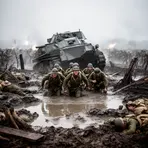
A major World War I battle in 1917 at Passchendaele known for mud and many deaths

A major World War I battle in 1917 that was fought in muddy fields in Belgium and caused heavy losses
Compounds
 1
7.8
1
7.8
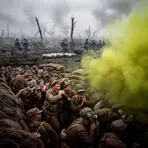
A World War I battle near Ypres where Germans first used poison gas on a large scale

A World War I battle near Ypres known for fierce fighting where neither side clearly won

A series of battles near Ypres in Belgium during World War I that included the first use of mustard gas

A major 1914 World War I battle near Ypres, Belgium with heavy fighting and no clear winner

A 1915 World War I battle near Ypres where German forces used chlorine gas and took ground from the Allies
A major World War I battle in 1917 at Passchendaele known for mud and many deaths
Surface Forms
Etymology
Ypres comes from the Flemish Ieper, named for the river Ieperlee in the region. That's why the 'Third Battle of Ypres' is named after the town and its often waterlogged, muddy ground where the fighting took place.