
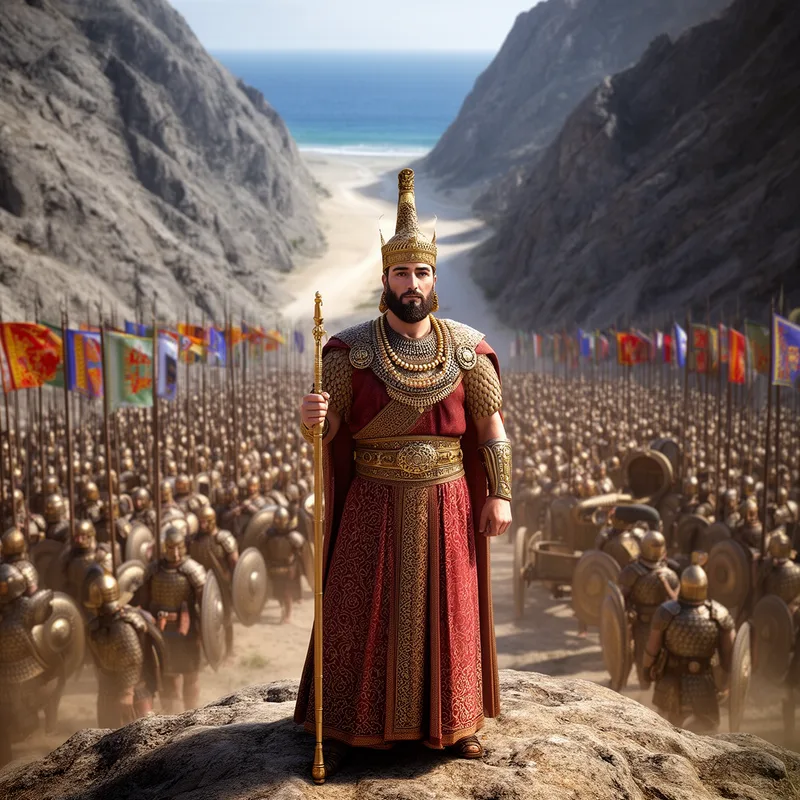
Xerxes the Great


 1
9.6
- proper noun
- /ˈzɜrksiːz ðə ɡreɪt/
- Xerxes the Great is known for his role in the Persian invasion of Greece, particularly for the battle at Thermopylae.
Examples
-
Historians still debate the strategic mistakes made by Xerxes the Great during his campaign against Greece.
-
The story of Xerxes the Great and the battle at Thermopylae has inspired countless works of literature and film.
-
Xerxes the Great is remembered for his ambitious construction projects as well as his military endeavors.
-
Xerxes the Great was a powerful king.
-
Many historians consider Xerxes the Great a pivotal figure in ancient history.
-
The reign of Xerxes the Great marked a significant period in Persian history, characterized by both military conquests and architectural achievements.
-
Many texts discuss the leadership of Xerxes the Great and the impact of his decisions on the outcome of the Greco-Persian Wars.
Synonyms
 1
9.9
King of Persia who led a major invasion of Greece but the Greeks defeated him
Surface Forms
Morphology
Xerxes + the + great
The construction is compositional: 'Xerxes' as a proper name plus the epithet 'the Great' (the + great) signals a distinguished or famous person. A B1 learner who knows the words will therefore infer it refers to a notable/honoured individual named Xerxes (though they would not deduce specific historical details like reign dates or campaigns).
Etymology
Xerxes the Great was a Persian king who sent huge armies to Greece and built very large palaces and even a bridge across the sea, creating a strong image of power. Because of these grand projects and bold military actions, people called him 'the Great', even though his campaign in Greece later failed.