

West Indian snowberry
- noun
- Gardeners appreciate the fragrant blossoms and decorative berries of the West Indian snowberry.
Examples
-
The West Indian snowberry thrives in warm, humid climates and is often seen climbing along garden fences.
-
Birds are known to feast on the juicy fruits of the West Indian snowberry during the late summer months.
-
The West Indian snowberry is known for its beautiful flowers.
-
Have you ever seen a West Indian snowberry in bloom?
-
Gardeners appreciate the fragrant blossoms and decorative berries of the West Indian snowberry.
-
The West Indian snowberry thrives in warm, humid climates and is often seen climbing along garden fences.
-
Birds are known to feast on the juicy fruits of the West Indian snowberry during the late summer months.
Synonyms
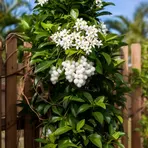
A climbing evergreen bush with small fragrant white flowers and round white berries

A green climbing bush with clusters of fragrant white or cream flowers and round white berries
Surface Forms
Morphology
The phrase reads as a straightforward noun phrase: 'West Indian' marks geographic origin and 'snowberry' transparently combines 'snow' + 'berry' to signal a white berry. This compositional pattern (modifier + compound plant name) is common cross-linguistically, so a B1 learner who knows the constituent meanings can infer it refers to a type of white-berried plant from the West Indies.
Etymology
The plant West Indian snowberry gets its name from its round, white berries that look like tiny snowballs and from its home in the 'West Indies' and southern Florida. So the name tells you both where the plant comes from and why its fruit is called a snowberry.

