

Wain
- noun
- /weɪn/
- Archaic
- As scholars have long noted, virtually the same white-haired figure appears on the exterior of The Hay Wain triptych (Escorial and Prado, Fig. 11).
- Wain and hay
Examples
-
This is also a work that proceeds with an inexorable progress of time, starting on its exterior with a scene from Creation, then moving, as if with the eye of a reader, from left to right across the interior from Eden through the eponymous Garden to Hell, much as in the interior of The Hay Wain triptych.
Academic text (2001) -
The theme of The Hay Wain triptych is worldly avarice and deception.
Academic text (2001) -
Wai-- Wain--
-
Thus, the interior of The Hay Wain presents another pilgrimage—akin to the hazardous journey of the Pedlar on its exterior—from the expulsion of evil from Heaven and from Eden at the left to the punishments of Hell at the right.
Academic text (2001) -
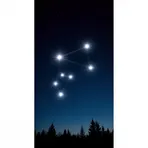
In ancient times, people believed that the stars formed a wain that guided travelers through the night sky.
-
Many farmers used to refer to the constellation Ursa Major as 'the wain' because it resembled a plough.
-
During our stargazing event, I learned that the wain is another name for the Big Dipper in the northern sky.
Synonyms
 11
3.2
11
3.2

A pattern of seven bright stars that looks like a large ladle in the northern sky
 7
5.1
7
5.1
A group of seven bright stars in the sky that form the Big Dipper

A group of seven bright stars that form the Big Dipper in the Ursa Major star pattern
Compounds
- Archaic
A group of seven bright stars that form the Big Dipper in the Ursa Major star pattern
Surface Forms
Etymology
Wain comes from an Old English word wægn meaning 'wagon', the same root as wagon. So the seven bright stars are called the Wain because they look like a wagon or plough in the sky.