
Vitruvian


 1
9.9
- noun
- /vɪˈtruːviən/
- Formal
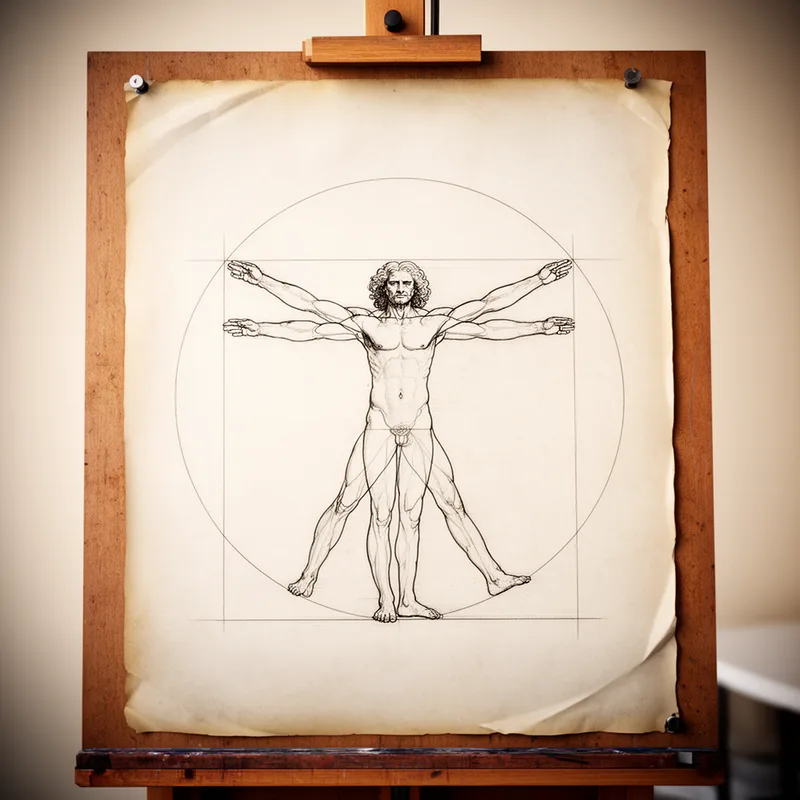
- Art historians often reference the Vitruvian Man as a symbol of harmony and balance in human anatomy.
- Vitruvian Man
Examples
-
Paradoxically, in some affected individuals, Vitruvian equality of height and span may occur.
Academic text (1992) -
The Vitruvian principles of firmitas, utilitas, venustas will be imposed on the project.
Academic text (2008) -
And the Vitruvian Man's a piece of work.
Blog text (16) -
Forrester's elaboration of the Vitruvian analogy was a new theorization indebted to eighteenth-century transformations in aesthetics.
Academic text (2013) -
Leonardo da Vinci's Vitruvian Man illustrates the ideal human proportions based on ancient Roman texts.
-
The Vitruvian Man has become an iconic representation of the intersection between art and science.
Surface Forms
Morphology
Vitruvian = Vitruvian (semi-transparent) = Vitruvius + ian
This noun is a lexicalized nominal use of the adjective Vitruvian, so the link is clear but the specific reference to ideal proportions is specialized.
Etymology
Vitruvian as a noun refers to an image or example that follows the rules of the Roman architect Vitruvius, like Leonardo da Vinci's famous 'Vitruvian Man' that shows ideal human 'proportion'. Calling a picture a 'Vitruvian' means it aims to show balanced, perfect body sizes as a model for art and design.