
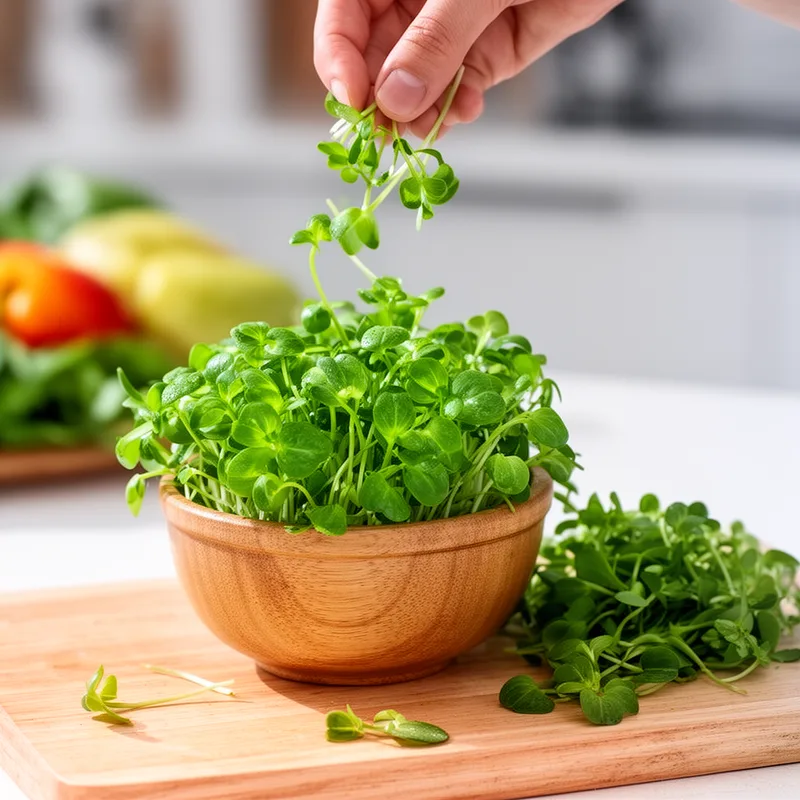
Valerianella locusta
- noun
- Specialized
- She sprinkled fresh Valerianella locusta on top of the salad for a delicate, nutty flavor.
Examples
-
Farmers often grow Valerianella locusta as a winter salad green in temperate climates.
-
I love adding Valerianella locusta to my salads.
-
Although sometimes dismissed as a weed, Valerianella locusta is a prized ingredient in French cuisine.
-
Have you tried Valerianella locusta in your dishes?
-
Farmers often grow Valerianella locusta as a winter salad green in temperate climates.
-
She sprinkled fresh Valerianella locusta on top of the salad for a delicate, nutty flavor.
-
I love adding Valerianella locusta to my salads.
Synonyms
 1
4.2
1
4.2

A small annual plant with tender edible leaves used in salads

A small leafy green with a mild nutty taste often eaten in salads
A small leafy plant people use in salads that can grow wild as a weed
Surface Forms
Morphology
This is a Latin binomial scientific name, i.e. a proper-label combination, not a compositional English phrase; knowing the literal constituents ('Valerianella' and 'Locusta') does not allow a B1 learner to infer the common-usage meaning of a mild salad green. In fact 'locusta' evokes 'locust' and the items are taxonomic labels rather than semantically motivated English words, so the overall meaning is arbitrary and unpredictable to learners.
Etymology
Valerianella locusta gets its common names from farm life: people called it 'lamb's lettuce' because lambs often ate its small, soft leaves, and sometimes 'corn salad' in old English. That's why the name means a small, mild salad green that we eat fresh in salads.