

Valeriana officinalis
- noun
- Specialized
- Valeriana officinalis has long been valued for its sedative properties in traditional medicine.
- Valeriana officinalis
Examples
-
Supplements containing extracts from Valeriana officinalis are often marketed as sleep aids.
-
The gardener cultivated Valeriana officinalis for both its attractive blooms and medicinal roots.
-
The herbalist recommended Valeriana officinalis for its calming effects.
-
Have you ever tried Valeriana officinalis for sleep issues?
-
Valeriana officinalis is commonly used in herbal medicine to promote relaxation and improve sleep quality.
-
Many people find that Valeriana officinalis helps them to unwind after a stressful day.
-
You can brew tea from Valeriana officinalis to enjoy its calming benefits before bedtime.
Synonyms
 32
8.2
32
8.2

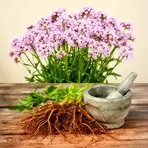
A plant with small white or pink flowers and roots used as medicine

A tall plant with sweet-smelling pink or white flowers and roots used in medicine

A tall plant with strong-smelling flowers whose roots are used to help people sleep
Surface Forms
Morphology
This binomial name is compositionally built from the genus 'Valeriana' and the epithet 'officinalis' meaning 'used in medicine', so a learner who knows both constituents can readily infer it denotes the medicinal Valeriana plant. Although botanical Latin is a specialized register, the parts combine transparently to give the overall meaning.
Etymology
Valeriana officinalis comes from old Latin words: Valeriana from 'valere' meaning 'to be well' and officinalis meaning 'sold in medicine shops'. Because people used its roots as a medicine to calm the nerves and help sleep, the name tells you it is a medicinal herb.