
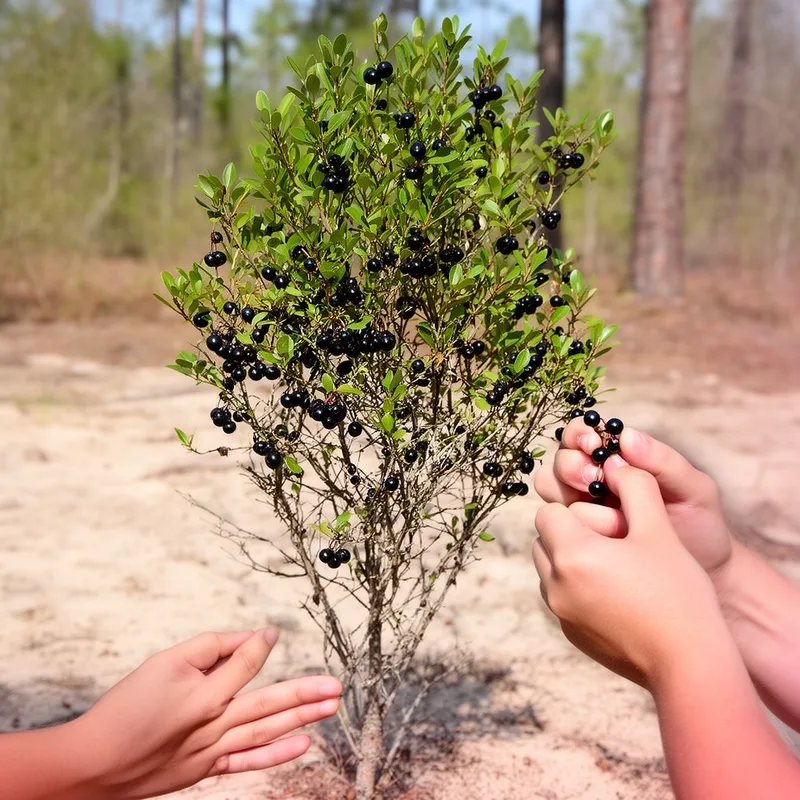
Vaccinium arboreum
- noun
- /ˌvækɪˈniːəm ɑːrˈbɔːriəm/
- Specialized
- Despite its appealing appearance, the berries of Vaccinium arboreum are not considered edible.
Examples
-
The Vaccinium arboreum is often found growing in dry, sandy soils in the southern United States.
-
Gardeners sometimes plant Vaccinium arboreum as an ornamental shrub for its attractive branches.
-
The Vaccinium arboreum grows well in sandy soils.
-
Some gardeners prefer Vaccinium arboreum for its hardiness.
-
Gardeners sometimes plant Vaccinium arboreum as an ornamental shrub for its attractive branches.
-
Despite its appealing appearance, the berries of Vaccinium arboreum are not considered edible.
-
The Vaccinium arboreum is often found growing in dry, sandy soils in the southern United States.
Synonyms
A small tree or shrub with black berries you cannot eat
A small shrub or tree with shiny leaves and small black berries that are not edible
How Edible
- Specialized

- US


 1
7.5
28
1.3
1
7.5
28
1.3
- Specialized
Surface Forms
Morphology
Vaccinium + arboreum
The name is compositional: Vaccinium denotes the genus (blueberry/cranberry shrubs) and arboreum is a Latin adjective meaning 'tree-like' or 'of trees' (related to English 'arboreal'). A learner who knows both parts can transparently infer 'a tree-like Vaccinium' (i.e., a shrub or small tree), which matches the given definition and follows ordinary descriptive naming patterns.
Etymology
Vaccinium arboreum comes from old Latin words: Vaccinium means 'berry' and arboreum means 'tree-like'. So the name is a simple picture of a berry-producing small tree, which fits this shrub with dark, inedible berries.