
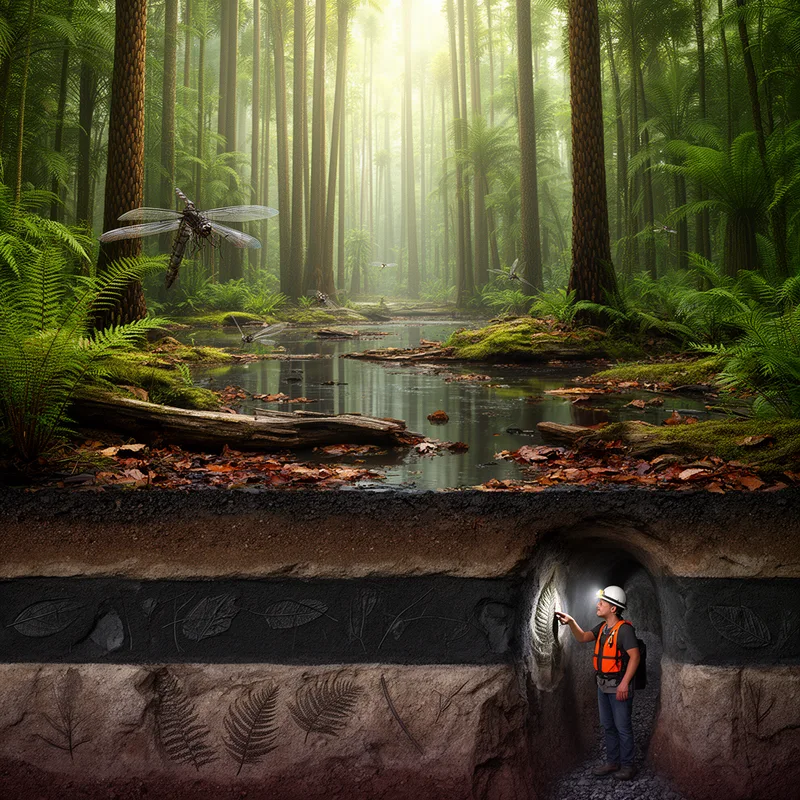
Upper Carboniferous
- noun
- /ˈʌpər ˌkɑrbəˈnɪfərəs/
- Specialized
- The Upper Carboniferous was a time of vast swamp forests that later formed major coal deposits.
Examples
-
Geologists study rock layers from the Upper Carboniferous to understand Earth's ancient environments.
-
Fossil remains from the Upper Carboniferous provide valuable insights into prehistoric plant life.
-
The Upper Carboniferous period was characterized by lush vegetation.
-
During the Upper Carboniferous, many coal deposits were formed.
-
Fossil remains from the Upper Carboniferous provide valuable insights into prehistoric plant life.
-
The Upper Carboniferous was a time of vast swamp forests that later formed major coal deposits.
-
Geologists study rock layers from the Upper Carboniferous to understand Earth's ancient environments.
Synonyms

A time about 310 to 280 million years ago with warm swampy land where much coal formed

A period long ago when swamp forests made much coal
Surface Forms
Morphology
The compound is compositionally predictable: 'upper' denotes the higher/later part of a time scale and 'Carboniferous' names the geological period, so 'Upper Carboniferous' clearly means the later subdivision of that period. Although technical, this formation follows a common cross-linguistic naming pattern (Upper/Late vs Lower/Early), so a learner who knows both constituents will readily infer the meaning.
Etymology
Upper Carboniferous uses two simple ideas: Upper shows it is the 'later' or higher rock layers, and Carboniferous means a time when many plants turned into 'coal'. So the name refers to the later part of the Carboniferous period, when warm swamp forests grew and later formed large coal deposits.

