
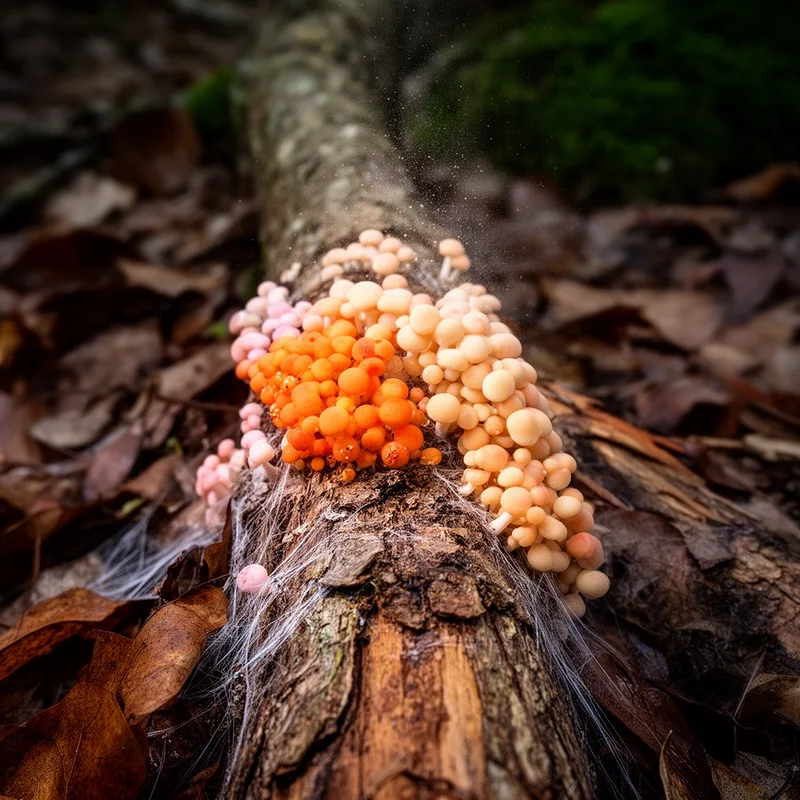
Tuberculariaceae
- noun
- /tjuːˌbɜːrkjʊˈlɛəriˌeɪsiː/
- Specialized
- The Tuberculariaceae are classified as imperfect fungi because their sexual reproductive stage is unknown.
Examples
-
Researchers have discovered new fungi within the Tuberculariaceae in decaying wood samples.
-
Many species in the Tuberculariaceae family are important decomposers in their habitats.
-
The Tuberculariaceae family includes many saprophytic fungi.
-
Researchers are studying Tuberculariaceae for their ecological roles.
-
Many species in the Tuberculariaceae family play a crucial role as decomposers in forest ecosystems.
-
Researchers have identified several new fungi belonging to the Tuberculariaceae family in samples of rotting wood.
-
The Tuberculariaceae family consists of fungi that primarily thrive on decaying organic matter.
Synonyms
A large group of fungi that mostly grow on dead plants and do not reproduce sexually
Surface Forms
Morphology
Tuberculariaceae = Tubercularia (opaque) = Tubercularia + aceae
The formation is a Latinized taxonomic family name (genus + the specialized suffix '-aceae'), which is a specialist convention not transparent to average learners.
Etymology
Tuberculariaceae comes from the Latin tuberculum meaning 'small lump' and the ending -aceae which means 'a family', and you can think of the English word tuber (a potato) to remember the 'lump' idea. So the name points to a family of fungi that often make small bump-like or tubercle structures, which explains the modern name.

