
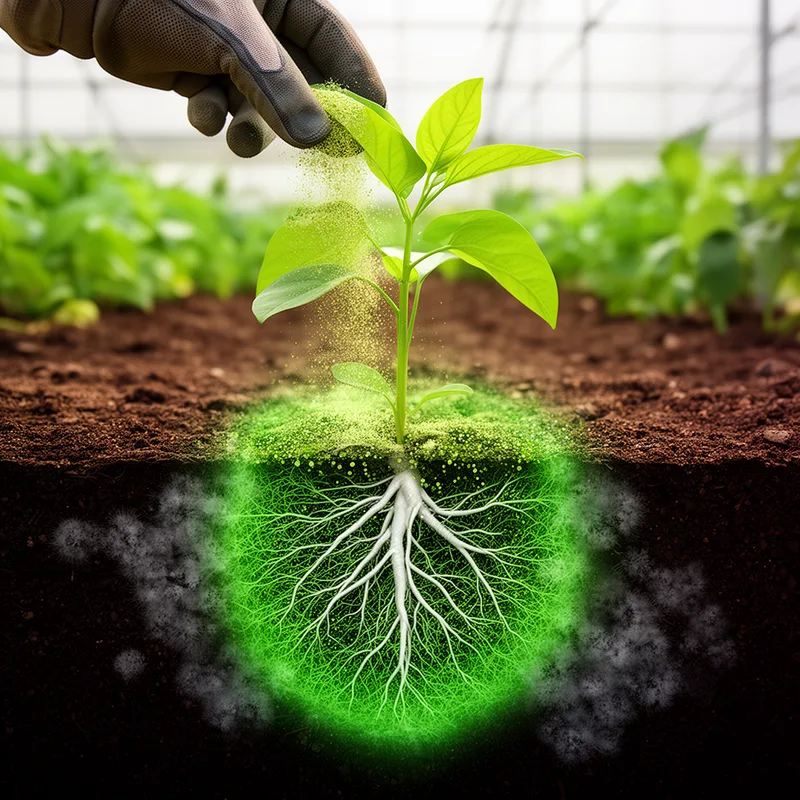
Trichoderma
- noun
- /ˌtrɪkəˈdɜrmə/
- Specialized
- Farmers often apply Trichoderma to improve soil health and increase crop yields.
Examples
-
Maximum dehydrogenase activity was achieved where a combination of NPK, PSM, Trichoderma harzianum, and organic mulch was applied.
Academic text (2014) -
Isolates of several Trichoderma spp. can provide effective control of this disease, and even better control if applied in combination with any of several bacterial biocontrol agents.
Academic text (2000) -
Every layer is watered with liquid that contains Trichoderma pseudoconingii culture.
Academic text (1998) -
The use of Trichoderma in organic farming helps protect plants from harmful pathogens.
-
Research shows that Trichoderma species can significantly enhance plant growth and resistance to disease.
Surface Forms
Morphology
Trichoderma = tricho + derma
The word is a Latin/Greek scientific name composed of combining forms ('tricho-' + 'derma') and is not transparently interpretable by an average B1 learner.
Etymology
Trichoderma comes from the Greek parts tricho- 'hair' and -derma 'skin'. The fungus often has a 'hairy' or fuzzy surface, so the name means 'hairy skin' and helps you remember that Trichoderma is a fungus used in farming to protect and help plants.

