
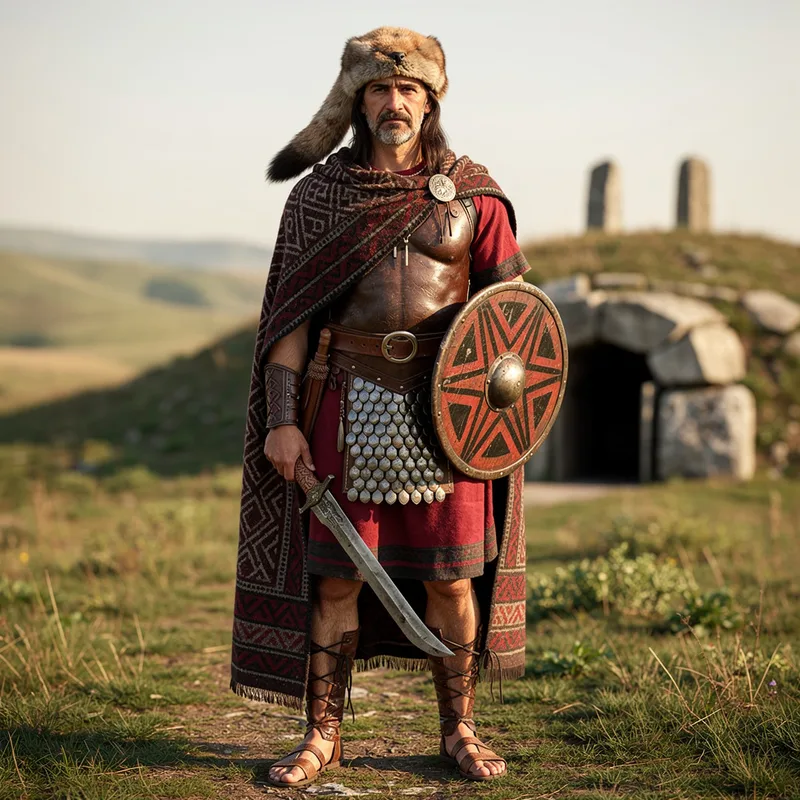
Thracian
 6
9.9

- noun
- /ˈθreɪʃən/
- "The Thracians entered the empire voluntarily, not with the force of arms," says Ignatov.
Examples
-
"And the Thracians were not so different from contemporary people.
Academic text (2007) -
Celts and Thracians engaged in military campaigns against the Scythians in Moldavia and southern Ukraine.
Academic text (2000) -
I'll wager 300 silver... on Demos, the Thracian.
-
The Thracians were a fractious collection of powerful but illiterate people.
Academic text (2007) -
Ancient sources state that the Thracians were excellent fighters, advanced in metalworking and horsemanship.
Academic text (2007) -
It was reasonably common for Thracians to own chariots, but not everyone had the means to take one with them to the afterlife.
Academic text (2007) -
Their archaeological remains are exceptionally important because the Thracians left no written records, though references to them do appear in the writings of their neighbors, the Greeks and the Romans.
Academic text (2007) -
The ancient historian described the Thracians as a formidable group known for their warriors and skill in combat.
-
During archaeological digs, many artifacts attributed to the Thracians have been uncovered in Southeast Europe.
-
The culture of the Thracians was rich in traditions that influenced neighboring regions in antiquity.
Compounds
- Specialized
An extinct language once spoken by the ancient Thracian people in Southeast Europe until the early Middle Ages
Surface Forms
Morphology
Etymology
Thracian comes from the Greek name Thrákē for a region and its people in southeast Europe. So a Thracian was a person who lived in or came from that area.