
Taisho


 1
9.9
- proper noun
- /ˈtaɪʃoʊ/
- Many art movements flourished during the Taisho period, showcasing a blend of traditional and modern influences.
- Taisho era
Examples
-
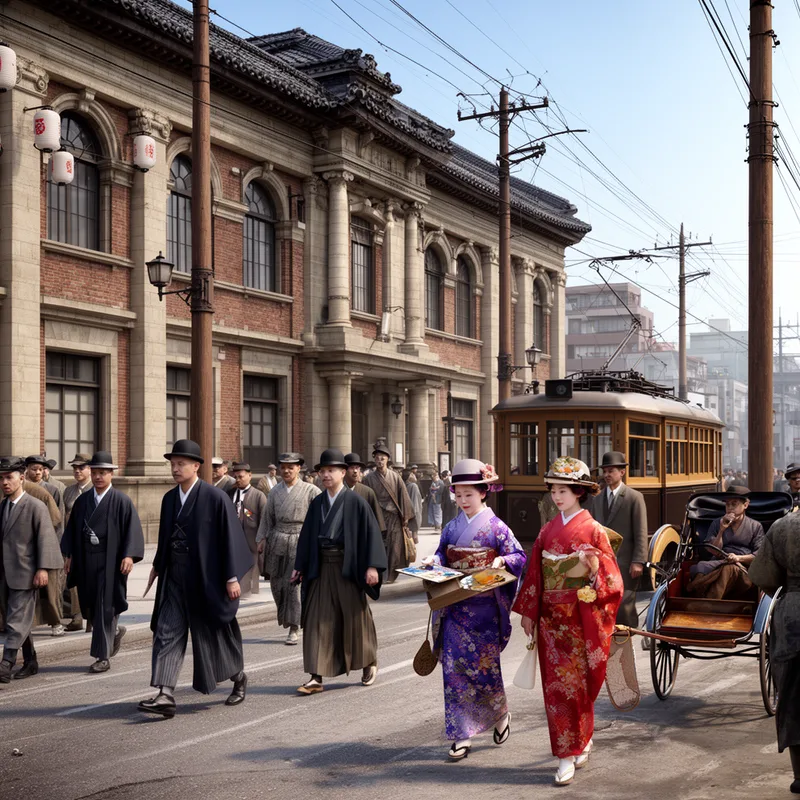
The Taisho era, which lasted from 1912 to 1926, was marked by significant cultural and political changes in Japan.
-
Against a background of economic prosperity and, in the arts, optimism and individualism during the Taisho period (1912-26), the institute continued a pattern of sending Nihonga painters abroad to work and study, notably to China, India, and Europe.
Academic text (2005) -
Between this victory and the start of the Taisho era in 1912, changes in the structure of consciousness can be detected which may have prepared the way for psychoanalysis.
Academic text (1990) -
So during the Meiji and Taisho eras, there was again a divergence between popular culture and intellectual culture in literature.
Blog text (17) -
With the 1912 transition from the Meiji Era to the Taisho Era, the cultural foundations of discretion rapidly weakened, leaving "skinship democracy" without a stable, offsetting opposition to counter and contain it.
Academic text (1990) -
The concept of "Taisho Democracy" represented a shift towards greater political liberalism in Japan during the 1920s.
Surface Forms
Etymology
Taisho for the period is named after Emperor Taisho, so it simply means 'the years he was emperor' from 1912 to 1926, and things from that time are called Taisho style.