
Taisho


 1
9.9
- proper noun
- /ˈtaɪʃoʊ/
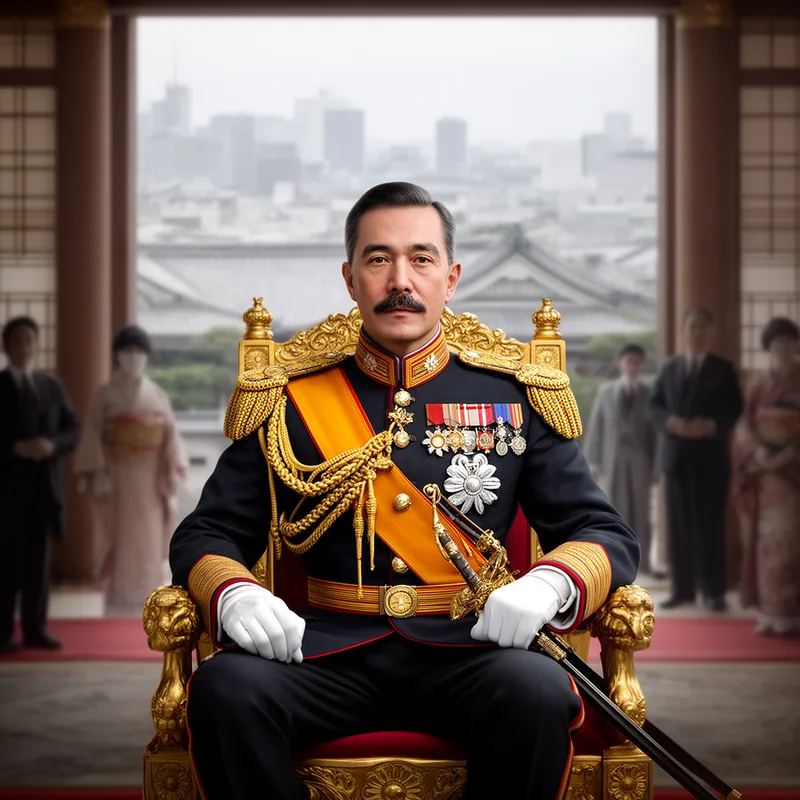
- After the death of Meiji, Taisho reigned for a short time (1912-1926) and was succeeded by Showa, who took over the throne in 1926.
- Emperor Taisho
Examples
-
After the death of the first restored Emperor, the Emperor of Meiji, in 1912, the mentally handicapped Emperor of Taisho had to be represented by the regency.
Academic text (2003) -
Although no one created the earthquake by aiming at the Taisho era, it is extremely interesting that it occurred in 1923, not 1913 or 1933; that is, two years before the end of the Taisho Emperor's short life, which was rumored to be terminated by poisoning.
Academic text (2003) -
Thus, using the year of birth, people refer to themselves as well as to others as, for example, "the Meiji person (Meiji no nigen)," "Taisho person," "Showa person," or, "I am a first digit Showa," subdividing an era.
Academic text (1991) -
Emperor Taisho brought significant political changes during his reign in Japan.
-
The period known as Taisho is remembered for its cultural and social transformations.
-
After Emperor Taisho ascended the throne, Japan experienced many modernization efforts.
Surface Forms
Etymology
Taisho as the emperor's name comes from the Japanese era name written with characters that mean 'great justice'. In Japan emperors are often called by their era name, so the ruler is known as Emperor Taisho.