

Sylvian fissure
- noun
- /ˈsɪlviən ˈfɪʃər/
- Specialized
- The Sylvian fissure is a key landmark that neurosurgeons use when mapping out brain surgeries.
Examples
-
The Sylvian fissure is crucial for understanding brain anatomy.
-
Damage to the Sylvian fissure region can affect speech and language processing in patients.
-
MRI scans clearly show the prominent Sylvian fissure separating the frontal and temporal lobes.
-
Researchers study the Sylvian fissure to learn about language processing.
-
The doctor explained that the Sylvian fissure is crucial for processing auditory information.
-
Brain scans revealed that the Sylvian fissure separates the frontal and temporal lobes.
-
Understanding the location of the Sylvian fissure helps in diagnosing certain neurological conditions.
Synonyms
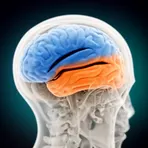
A deep groove on the side of the brain that separates the frontal lobe from the temporal lobe

A deep fold in the brain that separates the front and side parts

A deep groove in the brain that separates the front and side parts
Surface Forms
Morphology
Sylvian + fissure
The noun 'fissure' clearly indicates an anatomical slit, so a B1 learner who knows 'fissure' can infer this is a specific kind of anatomical groove. However, 'Sylvian' is an eponym/proper name with no transparent lexical contribution to the location or function, so the precise meaning (lateral sulcus separating frontal and temporal lobes) is not fully predictable from the parts.
Etymology
Sylvian fissure is named after a 17th-century doctor, Franciscus Sylvius, and the word fissure literally means 'deep groove'. So, because Sylvius described the deep crack on the side of the brain that separates the front and side parts, the name helps you remember it is the deep groove that divides those brain areas.

