
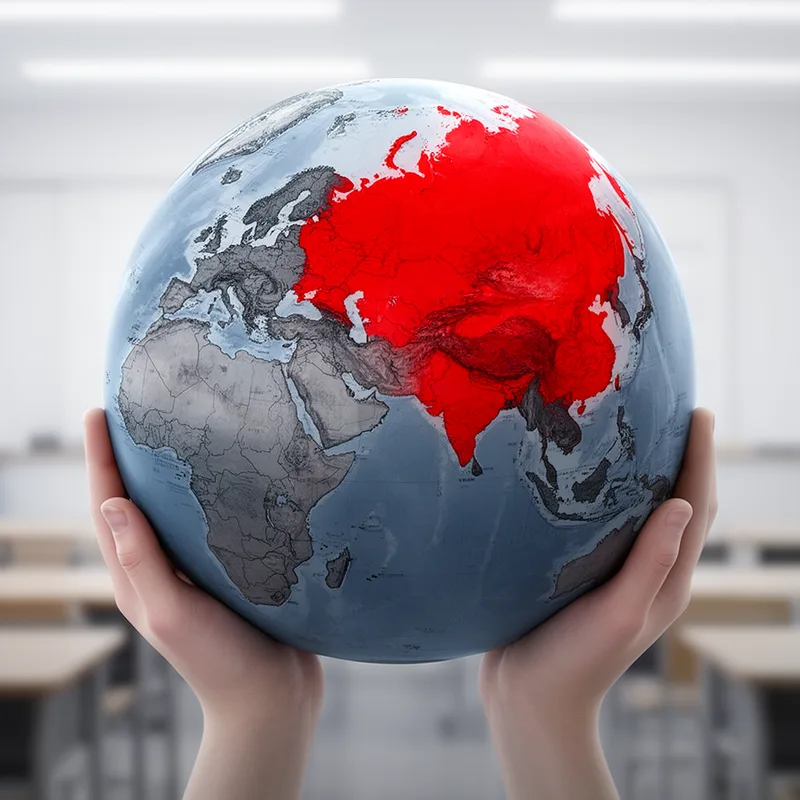
Soviet Russia
 1
5.2
1
5.2

- proper noun
- The United States isolated Soviet Russia for a decade and a half because of Moscow's radical intentions.
- post-Soviet Russia
Examples
-
Finland's long land border with Soviet Russia gave greater importance to the needs of the army both inside the defense establishment and in parliament.
Academic text (1999) -
Soviet Russia is our first and greatest example of a planned social order.
Academic text (1991) -
Four huge countries stand, the one opposing the other: China, Soviet Russia, America, and Japan.
Academic text (1991) -
Literary criticism in post-Soviet Russia is facing serious challenges.
Academic text (2001) -
Many articles in The Woman Worker are reports on contemporary life in Soviet Russia, and all of them mention women's emancipation.
Academic text (2014) -
Shrayer draws the reader's attention to a number of motifs that he suggests as allusions to the history of Soviet Russia.
Academic text (2006) -
World history's first model of a planned/distributive system did not arise in Soviet Russia but in Germany during World War I, when no socialist state was yet in existence.
Academic text (1991) -
The picture of Soviet Russia as painted in the Moscow trials is a picture of ferocious rival planners engaged in murderous competition.
Academic text (1991) -
The policies implemented in Soviet Russia shaped the lives of millions for several decades.
-
Many historians study the cultural evolution that occurred in Soviet Russia after the revolution.
Synonyms
A large republic of the former Soviet Union covering much of eastern Europe and northern Asia, now Russia
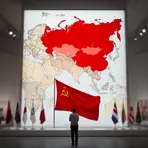
The largest republic of the former Soviet Union, covering much of eastern Europe and northern Asia from 1917 to 1991
Surface Forms
Morphology
The adjective 'Soviet' (connected to the former Soviet Union) combined with the noun 'Russia' yields the straightforward meaning 'Russia during the Soviet period' or 'the Soviet-era Russian state.' This is a regular adjective + noun composition and mirrors equivalent constructions in other languages, so a B1 learner who knows the constituents will readily infer the MWE's meaning.
Etymology
Soviet Russia comes from the Russian word soviet, which means 'council'. After 1917 these councils and the Communist party ran the country, so Soviet Russia came to mean Russia when it was part of the Soviet Union.