
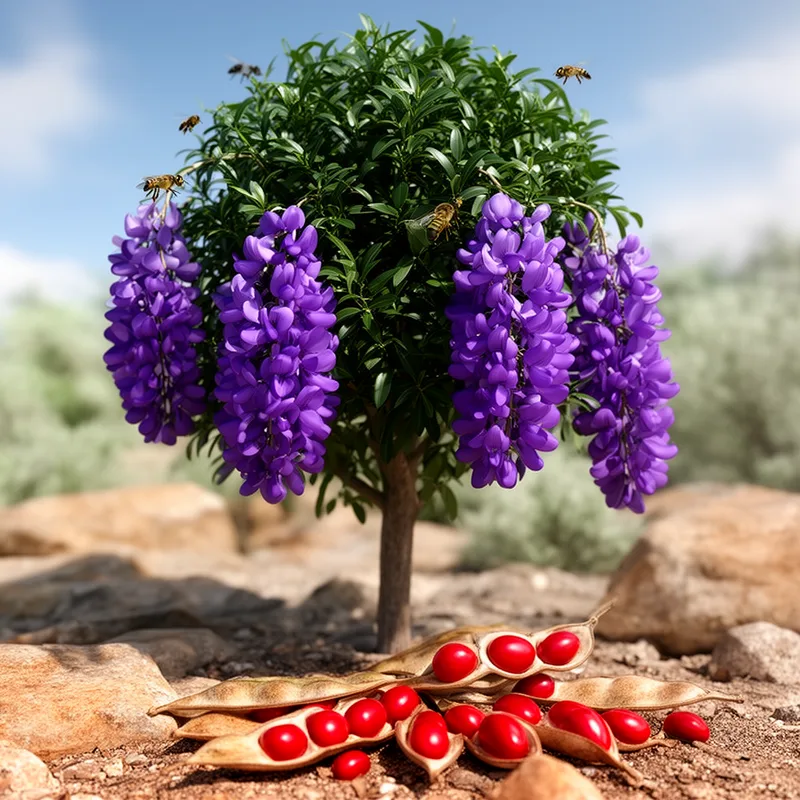
Sophora secundiflora
- noun
- /soʊˈfɔːrə sɪˌkʌndɪˈflɔːrə/
- Specialized
- Children should avoid the bright red seeds of Sophora secundiflora because they are highly poisonous.
Examples
-
The Sophora secundiflora is commonly known as the Texas mountain laurel in gardening and horticultural circles.
-
Every spring, the Sophora secundiflora fills the air with a scent similar to grape bubblegum.
-
The Sophora secundiflora is often found in arid regions.
-
Have you ever seen a Sophora secundiflora in bloom?
-
Children should avoid the bright red seeds of Sophora secundiflora because they are highly poisonous.
-
Every spring, the Sophora secundiflora fills the air with a scent similar to grape bubblegum.
-
Have you ever seen a Sophora secundiflora in bloom?
Synonyms

A shrub or small tree with blue flowers and red seeds that are poisonous to people and animals

A small shrub with blue fragrant flowers and red beans that are poisonous to farm animals

A small shrub or tree with blue flowers and red beans that are poisonous to livestock

A shrub or small tree with divided leaves, blue flower spikes and red seeds, some poisonous to farm animals
Surface Forms
Morphology
Sophora + secundiflora
This is a Latin binomial (a taxonomic proper name) rather than a compositional English phrase; the label denotes a specific species and its botanical properties are not inferable from the parts. A B1 learner who knows 'Sophora' as a genus and sees 'secundiflora' (not a normal English word) would not be able to derive the shrub’s meaning or properties without specialist botanical knowledge, so the expression is opaque.
Etymology
Sophora secundiflora is the plant's scientific Latin name. The second part, secundiflora, means 'flowers on one side' and Sophora was an old name for trees in the pea family, so the name paints a clear picture of a small evergreen tree with scented flower clusters and bright red seeds that people call the 'Texas mountain laurel'.

