

Slavophilia
- noun
- /slɑːˈvɒfɪliə/
- The debate between Slavophilia and Westernization shaped much of Russian society in the 1800s.
Examples
-
Many Russian intellectuals in the nineteenth century were attracted to Slavophilia as a way to preserve national identity.
-
His interest in Slavophilia led him to study Slavic folklore and Orthodox traditions.
-
The concept of Slavophilia emerged in the early 19th century.
-
Many Russian intellectuals embraced Slavophilia during the 1800s.
-
His interest in Slavophilia led him to study Slavic folklore and Orthodox traditions.
-
Many Russian intellectuals in the nineteenth century were attracted to Slavophilia as a way to preserve national identity.
-
The debate between Slavophilia and Westernization shaped much of Russian society in the 1800s.
Synonyms
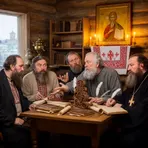
A group of Russian thinkers in the 1800s who wanted society to follow traditional Slavic customs and the Orthodox faith
Surface Forms
Morphology
Slavophilia = Slavophile (semi-transparent) = Slav + phil + ia
The element 'Slav' is clear, but the Greek-derived combining element '-phil/‑philia' and the suffix '-ia' are learned, academic morphemes likely unfamiliar to lower-level learners.
Etymology
Slavophilia comes from Slavo- for the Slavic people and -philia meaning 'love', the same '-phile' you see in Anglophile or bibliophile. It was a 19th-century movement in Russia that 'loved' Slavic traditions and wanted to base society on them, so Slavophilia means strong support for Slavic culture and ways.

