
Sinhalese
 2
8.8

- adjective
- /sɪnəˈliːz/
- In general, national elites in the Sri Lankan government, based in Colombo, are usually Sinhalese and tend to advocate for family planning programs in the estates.
- Sinhalese Buddhist
- Sinhalese nation
- Sinhalese majority
Examples
-
Herath begins by recalling the glories of Sinhalese history.
Academic text (1990) -
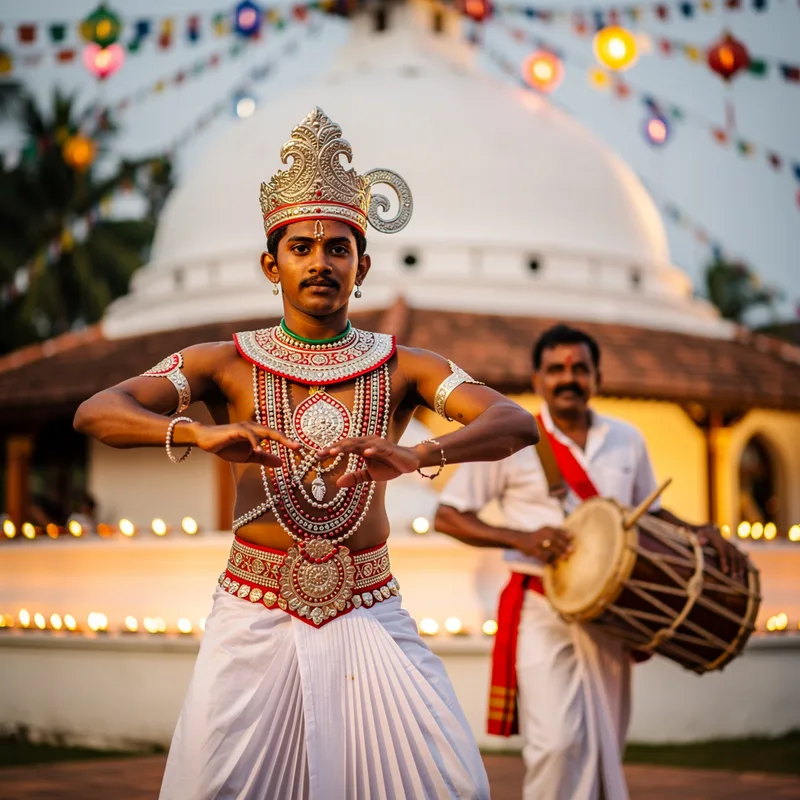
Many Sinhalese traditions are rich with cultural significance and passed down through generations.
-
Not so the Sinhalese journalists who have absolutely no community to fall back on.
Blog text (18) -
When I spoke to him last weekend, he mentioned almost in passing that he had another Sinhalese reporter staying.
Blog text (18) -
So it's all the more surprising that a Sinhalese journalist should be in trouble.
Blog text (18) -
The central theme of the Jayakody story also mirrors Sinhalese history.
Academic text (1992) -
The practice of Sinhalese nationalism is, then, as much a process of exclusion as of inclusion.
Academic text (1990) -
Thus, Mahaweli's direct beneficiaries were likely to be Sinhalese settlers.
Academic text (1997) -
Sinhalese nationalism, however, does not encompass every social group located in Sri Lanka.
Academic text (1990) -
Since the 1950s, Sri Lanka has been governed primarily by the Sinhalese Buddhist majority, sometimes at the expense of the Tamil minority.
Academic text (1992)
Synonyms

 1
8.2
Relating to the people or language of Sri Lanka's largest group
 1
9.2
About the Sinhalese people or their language
Compounds
Surface Forms
Morphology
Sinhalese = Sinhala (transparent) = Sinhala + ese
Formed from the proper name 'Sinhala' with the productive demonym/language suffix '-ese', so the adjectival meaning is directly inferable.
Etymology
Sinhalese comes from Sinhala, which itself comes from an old Indian word siṃha meaning 'lion'. So Sinhalese as an adjective describes things that belong to the people or culture of Sri Lanka, the island once called the 'lion island'.