
Sienese


 1
8.4
1
8.4
- noun
- /siˈɛniz/
- The procession of October 16, 1390, was held at a time when the Florentines were in conflict with the Sienese, Giangaleazzo Visconti, and his Milanese army, and were concerned about the plague.
Examples
-
A Duccio Madonna from the Sienese is in Perugia's Priori.
Fiction book (1997) -
"Your grandfather," I've been told, "was largely responsible for putting the early Italian masters, especially the Sienese, back on the map."
Fiction book (2001) -
The devil inside a statue of Diana actually speaks in the life of Saint Andrew, and as late as the fourteenth century, the Sienese attributed very real military setbacks to the malevolent power of a pagan statue.
Academic text (2005) -
For instance, in the fourteenth century, the Sienese excavated and later reburied a pagan statue because of the belief that admiration for the sculpture had caused the city's military defeats.
Academic text (2005) -
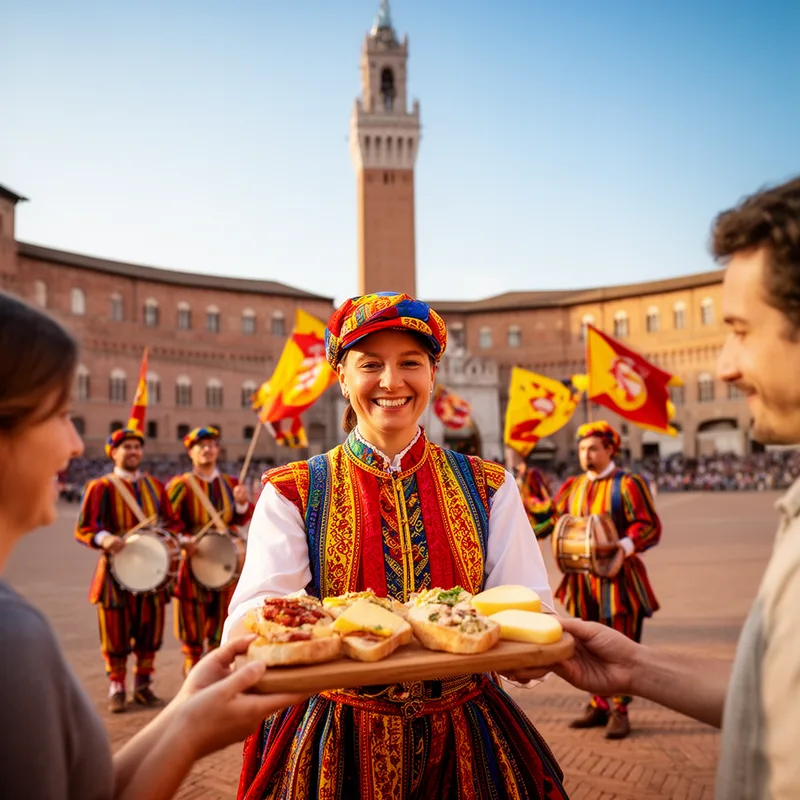
The Palio is a famous horse race that brings together the Sienese community every summer.
-
The Sienese people are known for their rich artistic heritage and distinct traditions.
-
Every year, thousands of tourists gather in Siena to experience the vibrant culture of the Sienese.
How Specific

Surface Forms
Morphology
Sienese = Siena (transparent) = Siena + ese
The demonym for a person from Siena is formed openly from the place name plus '-ese', a common and recognizable pattern.
Etymology
Sienese comes from the city name Siena and the ending -ese, which means 'from' or 'connected to', as in Portuguese. So a Sienese is 'someone from Siena' or the people of Siena.