
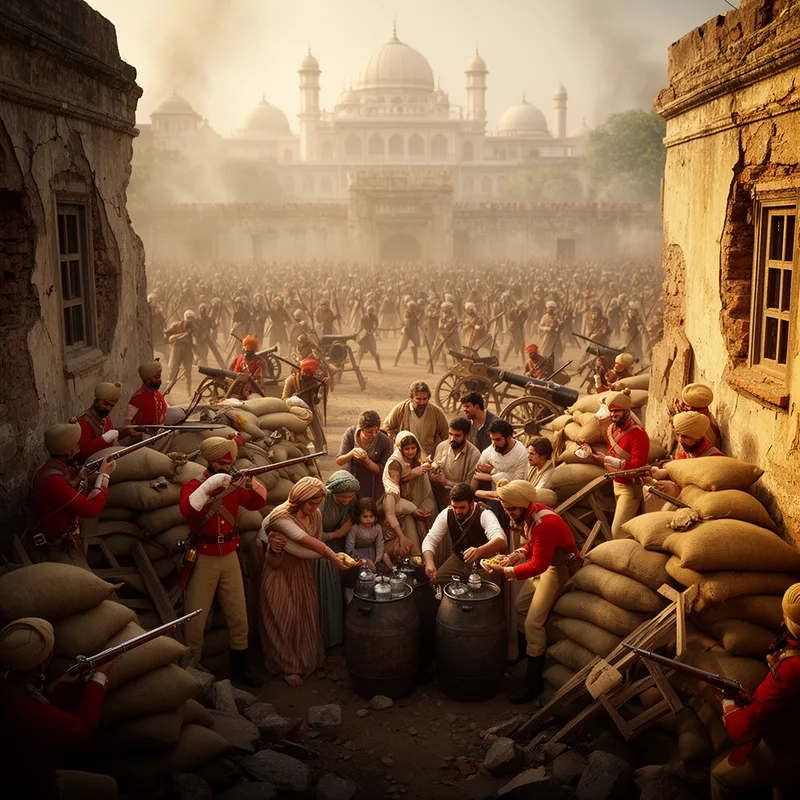
Siege of Lucknow
- noun
- Many civilians and soldiers suffered hardships during the Siege of Lucknow in 1857.
Examples
-
The Siege of Lucknow is frequently mentioned in British colonial history.
-
The Siege of Lucknow was one of the most dramatic events of the Indian Mutiny.
-
The Siege of Lucknow lasted for several months.
-
Many historians study the Siege of Lucknow for its strategic significance.
-
The Siege of Lucknow was a pivotal moment in the Indian Mutiny of 1857, showcasing the resilience of British residents under siege.
-
During the Siege of Lucknow, British forces faced tremendous challenges as they struggled to defend their position against Indian insurgents.
-
Many historical accounts detail the bravery displayed by the soldiers and civilians during the intense Siege of Lucknow in 1857.
Surface Forms
Morphology
This is a straightforward composition of 'siege' (a prolonged military encirclement) with a place name, so a learner who knows those words will readily infer it refers to a prolonged military attack at Lucknow. The prepositional pattern 'siege of + place' is cross-linguistically common, making the event meaning transparent to B1 learners.
Etymology
Siege of Lucknow was a real event in 1857 when the city of Lucknow was surrounded by Indian rebels and British soldiers and many people were trapped inside for months. That's why the name refers to 'a long military attack where people are surrounded and cut off'.

