

Setaria viridis
- noun
- Specialized
- Farmers often struggle to control Setaria viridis due to its rapid growth and prolific seed production.
Examples
-
The invasive spread of Setaria viridis can significantly reduce crop yields if not managed effectively.
-
Farmers consider Setaria viridis a troublesome weed.
-
Setaria viridis is frequently found in disturbed soils and crop fields across North America.
-
The Setaria viridis is often found in disturbed areas.
-
Setaria viridis is often regarded as a troublesome weed in agricultural fields across North America.
-
Due to its rapid growth, Setaria viridis can outcompete other plants in disturbed areas.
-
Setaria viridis thrives in sunny conditions, making it a common sight in crop fields.
Synonyms
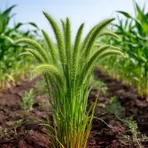
A common annual grass with green, bristly flower heads that often grows as a weed in fields
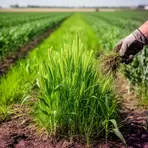
A fast growing grass that spreads quickly and harms crops
Surface Forms
Morphology
Setaria + viridis
This is a Linnaean binomial composed of a genus name and a Latin adjectival epithet: Setaria (a grass) + viridis (Latin for 'green'). If a learner knows both constituents, the meaning 'green Setaria' (green foxtail) is directly derivable from the parts, so the expression is fully compositional. Although 'viridis' is Latin and may be unfamiliar to many learners, the morphological logic is transparent and consistent across languages using scientific names.
Etymology
Setaria viridis is the scientific name for a grass often called 'green foxtail'. Its long, brush-like seed head looks like a fox's tail, so the words green and foxtail create a clear picture and help you remember it is a common weed in fields.

