
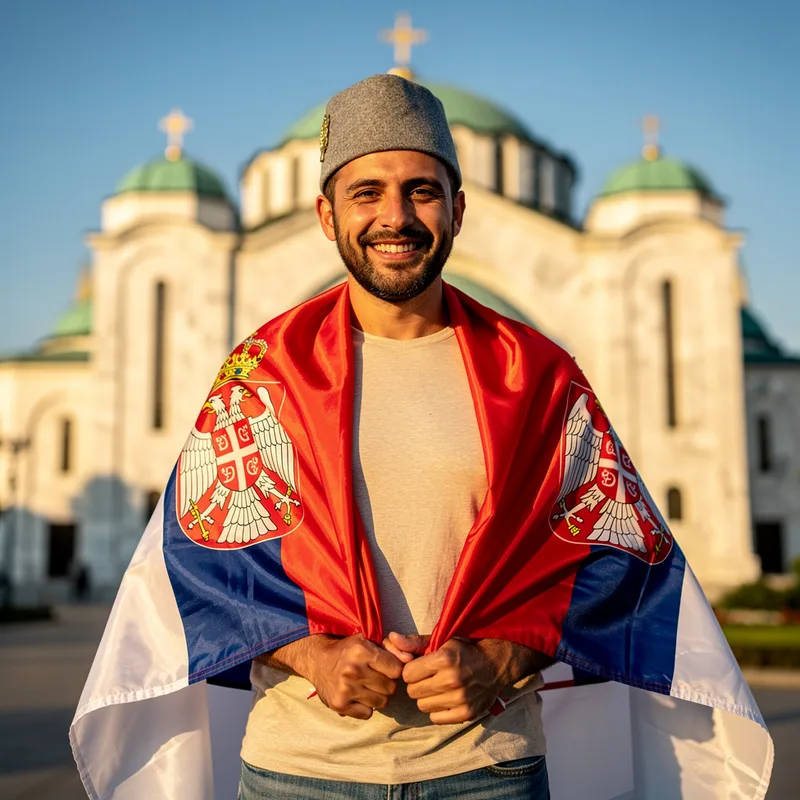
Serb
 242
3.4
242
3.4

- noun
- /sɜrb/
- This victory increased Lazar's authority tenfold and he managed to form a broad alliance consisting of Serbs, Bolgas, Bosnians and Albans.
- Serb and Croat
- Bosnian Serb
- Croatian Serb
Loading YouTube…
Watch on YouTubeIn the Paya region, the Serbs pronounce it Pech, but in Albanian, it's pronounced Paya.
- In the Paya region, the Serbs pronounce it Pech, but in Albanian, it's pronounced Paya.
- So then UN they got permission to bomb the Serbs for their aggressive action.
- In any case, the last chance of breaking this dragnet was the French breaking through, but once the Serbs withdrew from Babuna Pass, that was it.
- close the the Russians, close allies, the Serbs in order to break off Kosovo.
- I was more able dreaming to help Krots because we are more close with Krots than Serbs.
- If you go to a place like Bosnia, right, the Croats and the Serbs, Oh my God.
Examples
-
The Serb position in Kosovo had been permanently undermined by the failure of a 1689 Serb rebellion against Ottoman rule.
Academic text (1999) -
Now, we are headed right into the heart of this Balkan madness, into Serb territory.
-
I was not a good Serb woman.
-
I am a Serb patriot.
-
Still, although I hated the Serb armies, I didn't hate the Serbs around me.
Fiction book (1997) -
One of the body's purposes was to ensure the rights of Serb minorities were upheld.
Blog text (34) -
He's a Serb, ex-paramilitary.
-
Many Serbs celebrate their heritage with traditional music and dance.
-
As a proud Serb, he enjoyed sharing stories about his family's history.
-
The Serb community gathered to commemorate an important cultural festival.
Synonyms
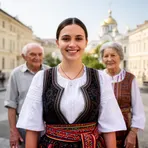
A person whose family comes from Serbia or nearby areas
A person from Serbia or whose family comes from Serbia
Surface Forms
Etymology
Serb comes from the Slavic name Srbin, the word people in the region used for themselves, and it is the same root as Serbia, the country's name. So a Serb is someone who belongs to that people or comes from that country.