
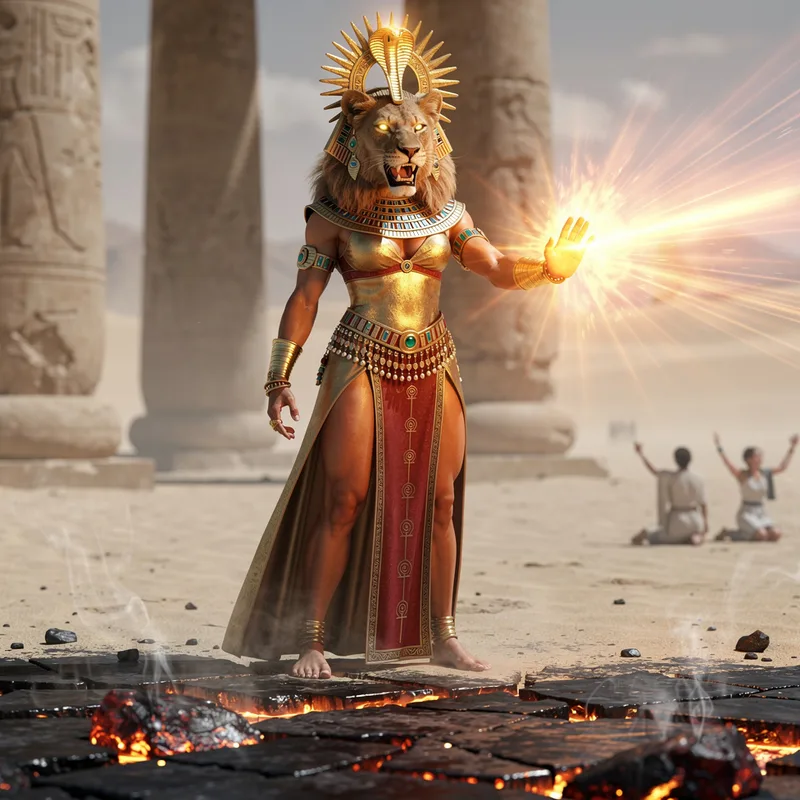
Sekhmet
 1
9.9
1
9.9

- proper noun
- Literature
- Many temples were built in honor of Sekhmet, illustrating her importance in Egyptian mythology.
- Sekhmet was a goddess
Examples
-
In ancient Egypt, the goddess Sekhmet was often depicted with the head of a lion, symbolizing her fierce nature.
-
Bastet, a feline-headed deity who guarded against evil, and the fierce Sekhmet.
Academic text (2006) -
Now, after years of being hidden, the ancient Staff of Sekhmet has been found.
-
This Sekhmet was a goddess.
-
As for the goddesses, is Sekhmet a kickass heroine or villain?
Blog text (6) -
Great Sekhmet... Pharaoh drinks in your name... and prays for victory over the Hittites at Kadesh.
-
In the ritual, Mut, in the guise of Sekhmet, was sated with red-dyed beer.
Academic text (2006) -
The stories of Medusa, Sekhmet, Pele, and Kali all tell the same tale of a woman who had the fire in her soul ignited.
Blog text (11) -
But Hatshepsut is also shown on the reliefs with the feline goddesses Bastet and Sekhmet.
Academic text (2006) -
PHOTO (COLOR): Ancient Egypt's mother goddess Mut was depicted in various guises at her temple, from Hathor, the goddess of love, to Sekhmet, a fierce, lion-headed goddess.
Academic text (2006)
Synonyms
A lioness-headed ancient Egyptian goddess of the sun, seen as both a healer and a destructive force

A powerful sun goddess in ancient Egypt who appears as a lioness and protects or destroys

A god or goddess worshipped in ancient Egypt
Surface Forms
Etymology
Sekhmet comes from the ancient Egyptian word sekhem meaning 'power' or 'might', so her name is like 'the powerful one'. She is shown as a fierce lioness tied to the hot sun that can destroy life, which is why she represents the sun's life-destroying power.