
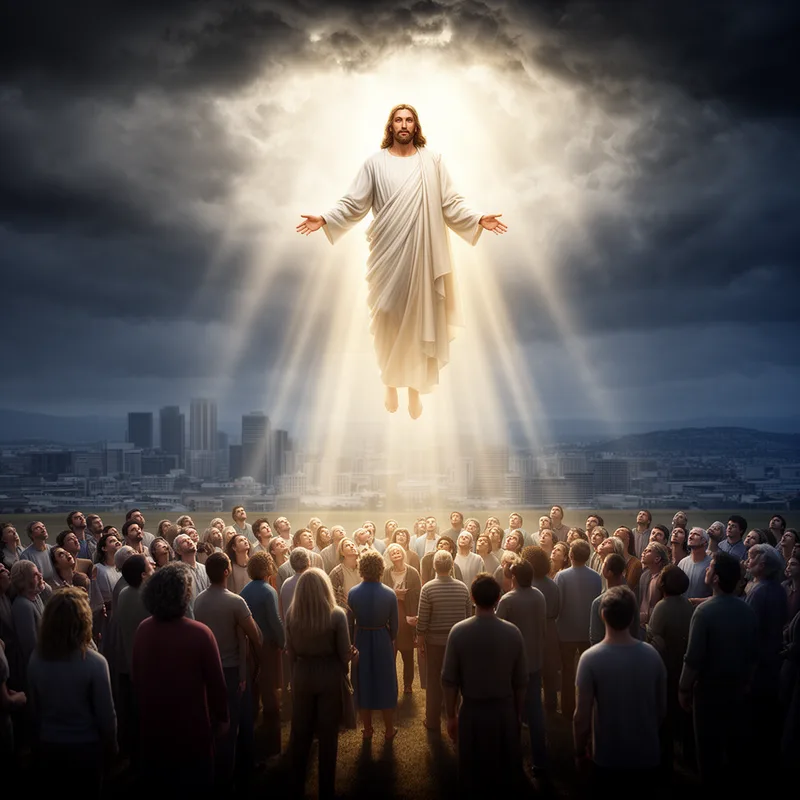
Second Advent


 1
9.9
1
9.9
- noun
- /ˈsɛkənd ˈæd.vənt/
- Christians believe that the second advent of Jesus will bring about the final judgment of humanity.
Examples
-
The whole Scriptural treatment of the Second Advent is, of course, entwined with that millennial hope of the Jews, so alien to modern minds.
Academic text (2017) -
During the second advent, it is said that Jesus will return to fulfill the prophecies of the Last Judgment.
-
Many theologians emphasize the importance of being prepared for the second advent of Christ as a time of great change.
Synonyms
 50
7.9
50
7.9
The final event when God judges all people and decides their eternal fate
 19
8.8
19
8.8
In Christian belief, a future day when God judges everyone's life and decides their final place after death
 16
8.7
16
8.7
A day at the end of time when God judges everyone for their actions
 9
7.4
9
7.4
The return of Jesus Christ to earth to judge people at the end of the world
 2
9.3
2
9.3
A final day when God decides each person's fate, rewarding good and punishing bad
 1
6.8
1
6.8
Christians believe Jesus will return to earth to judge people
 1
9.9
1
9.9
The return of Jesus Christ to earth to judge people at the end of the world
 1
8.8
1
8.8
The expected return of Jesus Christ to judge the world
Surface Forms
Morphology
Both constituents directly contribute to the meaning: 'Second' signals a subsequent occurrence and 'Advent' denotes the prophesied return of Christ, so together they straightforwardly refer to Christ's return (the second coming). This is a regular compositional pattern (cf. 'Second Coming') and would be intelligible to a B1 learner who knows both words.
Etymology
Second Advent comes from the older religious word Advent, which means 'a coming' and was used for the time before Jesus' first arrival at Christmas. So Second Advent means the 'return' or 'coming back' of Jesus to earth to 'judge' people.