
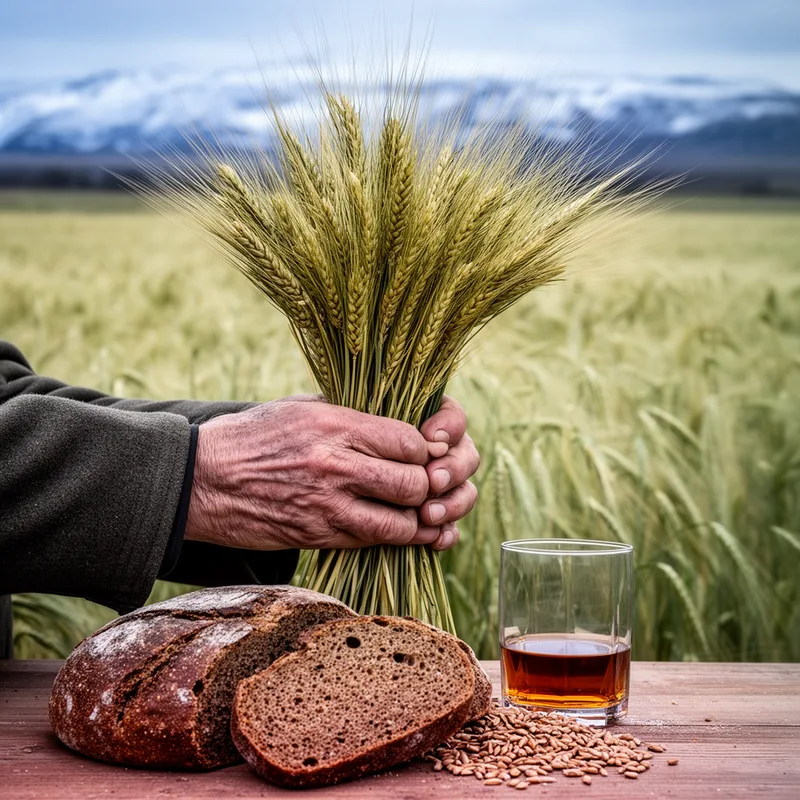
Secale cereale


 1
8.2
1
8.2
- noun
- /sɪˈkeɪli ˈsɛriˌeɪl/
- Specialized
- Farmers often plant Secale cereale as a cover crop to improve soil quality.
Examples
-
Secale cereale is widely grown in Europe for its grain, which is used to make bread and whiskey.
-
The cold-resistant nature of Secale cereale makes it suitable for cultivation in northern climates.
-
Farmers in Europe often grow Secale cereale for its nutritious grain.
-
Did you know that Secale cereale is used to make rye bread?
-
Secale cereale, commonly known as rye, is often used to make bread in many regions.
-
Farmers grow Secale cereale because it thrives in cooler climates.
-
During harvest, the fields of Secale cereale sway gently in the breeze, signaling a good crop.
Synonyms
 35
3.4
35
3.4
A hardy grass grown for grain used for bread and animal food
Surface Forms
Morphology
Secale + cereale
The term is a Latin binomial (taxonomic name) whose parts point to its referent: 'Secale' denotes the genus of rye grasses and 'cereale' evokes 'cereal'. If a learner knows these constituent meanings they can infer it refers to the cereal rye, but the form is specialized (Latin naming rather than a normal English compound) and requires some domain knowledge, so the relation is only partially predictable.
Etymology
Secale cereale is the Latin name for the grain we call 'rye', with Secale and cereale pointing to a tough cereal plant. Because this hardy grain grows well in cold fields and was used for bread and whiskey, the name now refers to that rye plant used for food and drink.