
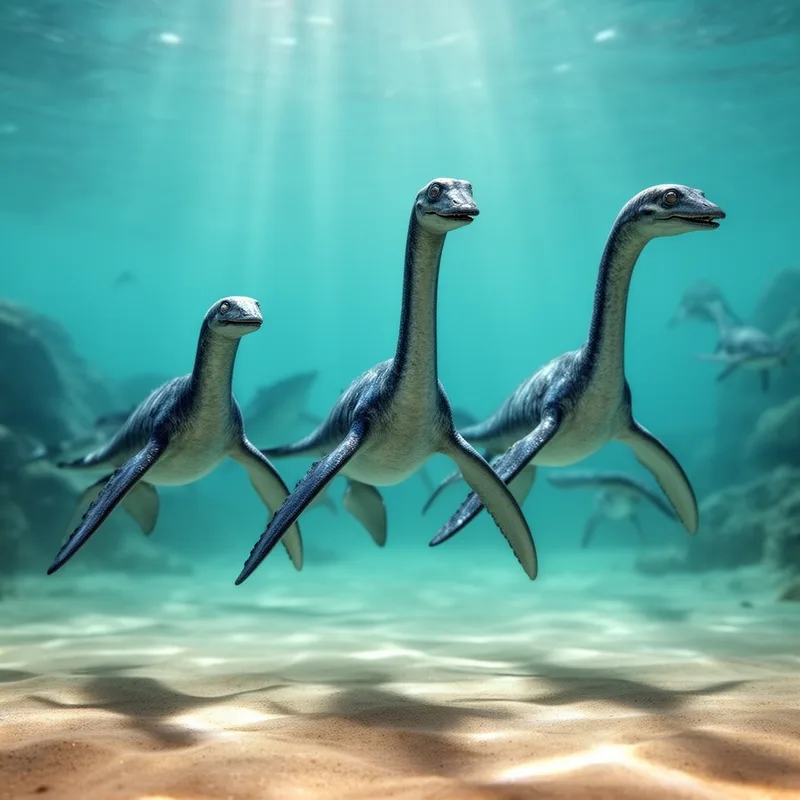
Sauropterygia
- noun
- Specialized
- The Sauropterygia were highly adapted for life in ancient seas, with their elongated bodies and paddled limbs.
Examples
-
Modern studies of Sauropterygia help paleontologists understand the evolution of aquatic reptiles.
-
Many fossils of Sauropterygia have been discovered in marine sedimentary rocks from the Mesozoic era.
-
The Sauropterygia thrived in the Mesozoic era.
-
Did you know that Sauropterygians had flipper-like limbs?
-
Numerous specimens of Sauropterygia have been unearthed, providing valuable insights into their adaptations to marine life.
-
Researchers study Sauropterygia to learn more about the unique features that allowed these reptiles to thrive in ancient oceans.
-
The Sauropterygia are known for their distinct flipper-like limbs that made them efficient swimmers in the prehistoric seas.
How Aquatic


Surface Forms
Etymology
Sauropterygia comes from Greek parts sauro- meaning 'lizard' and pteryg- meaning 'fin' or 'wing', as in pterodactyl. So the name is a helpful picture: a group of 'lizard' animals with fin-like, wing-like limbs, which fits these sea reptiles with flippers and long necks.