
Sassanid


 1
9.9
- proper noun
- /ˈsæsənɪd/
- The Arabs captured the Sassanid capital of Ctesiphon in the 630s, and the empire collapsed by 650.
- Sassanid era
Examples
-
A look at the works of Persian literature relevant to Iran's ancient political geography, such as the poet Ferdowsi's Shahnameh, reveals that the Sassanids helped develop the concept of territory within the framework of defined boundaries.
Academic text (2007) -
Popularly known as an epic account of ancient Persian history, especially of the Sassanid period (224-651 CE), the Shahnameh provides a remarkable description of the development of the concept of state in ancient Persia.
Academic text (2007) -
Welcome to our video on the last Sassanid kings and their adventures in the East.
-
Today, let us ride with the Sassanid horse Archers.
-
Development of the concept of territory in the Sassanid era went hand in hand with the evolution of the concept of boundary.
Academic text (2007) -
The Roman invasion of the Sassanid domain initially meets negligible resistance.
Academic text (1999) -
However, the Sassanid era was coming to an end as the Arab influx became a flood fueled by Islam.
Academic text (2007) -
The Sassanids had a lot of contact with the Chinese, and the last Sassanid king and some of his court fled to Tang China after the Arab conquest.
Blog text (4) -
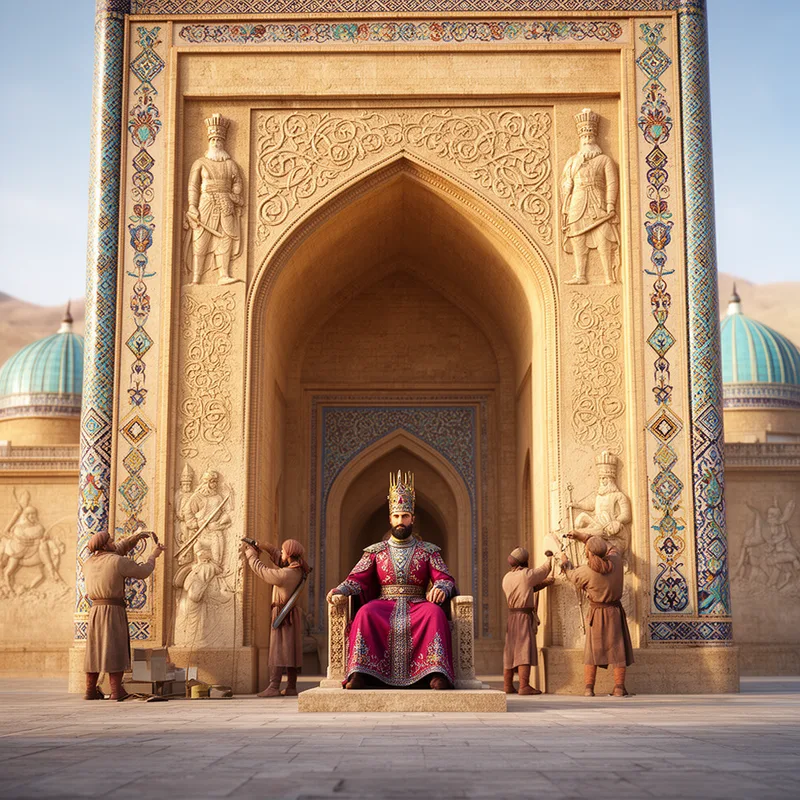
The Sassanid dynasty was known for its impressive architectural achievements, including the grand palaces built during its rule.
-
Many cultural advancements, such as art and literature, flourished under the guidance of the Sassanid empire.
Surface Forms
Morphology
Sassanid = Sassan (semi-transparent) = Sassan + id
Formed from the proper name 'Sassan' with the suffix '-id' to denote the dynasty; morphologically clear but historically/specialized.
Etymology
Sassanid comes from the founder's name Sasan and the ending -id, which means 'descendant' or 'son of'. So the Sassanid dynasty is the ruling family and empire in Persia from 224 to 651 AD.