
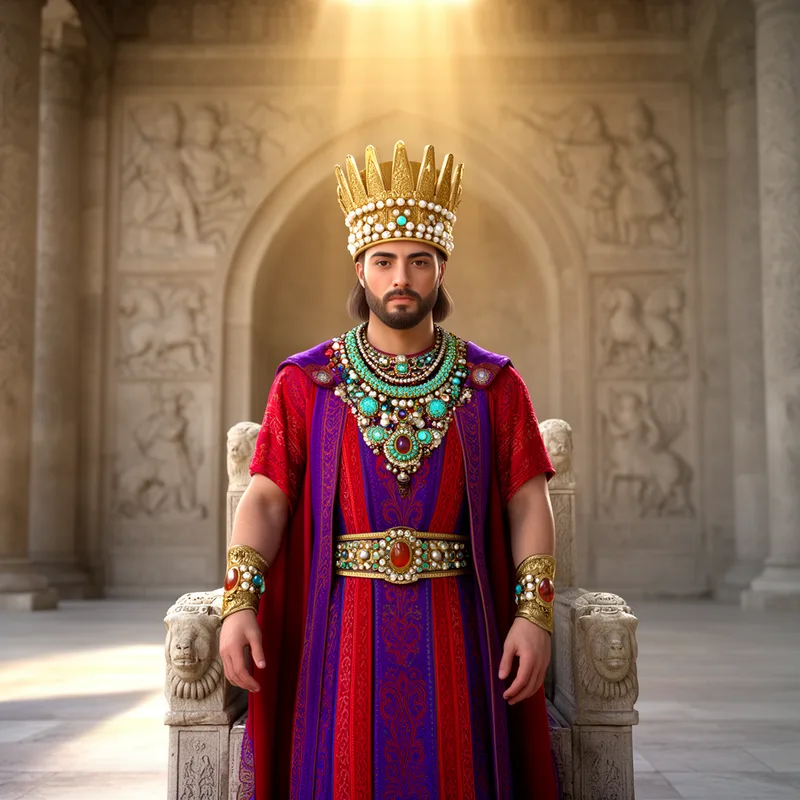
Sassanid
- proper noun
- /ˈsæsənɪd/
- The founding Sassanid, Ardashir I, revived the Achaemenids' political organization of the state, dividing it into 20 autonomous countries.
Examples
-
As Khalid's troops were tired after the long March and the battle, his army wasn't able to pursue the Sassanid survivors.
-
Many historians study the political systems established by the Sassanid rulers during their reign.
-
His son Amor the Second accepted Sassanid rule and became their vassal.
-
The Sassanid dynasty was known for its remarkable contributions to art and architecture in ancient Persia.
-
The fall of the Sassanid Empire in 651 AD marked the end of a significant era in Persian history.
Surface Forms
Morphology
Sassanid = Sassan (semi-transparent) = Sassan + id
Built from the proper name 'Sassan' plus the dynastic/formational suffix '-id'; the morphological relation is recognizable but historically specialized.
Etymology
Sassanid comes from the name Sasan plus the ending -id, meaning 'son of' or 'descendant'. So a Sassanid is a person who belongs to the Sasan family or dynasty.

